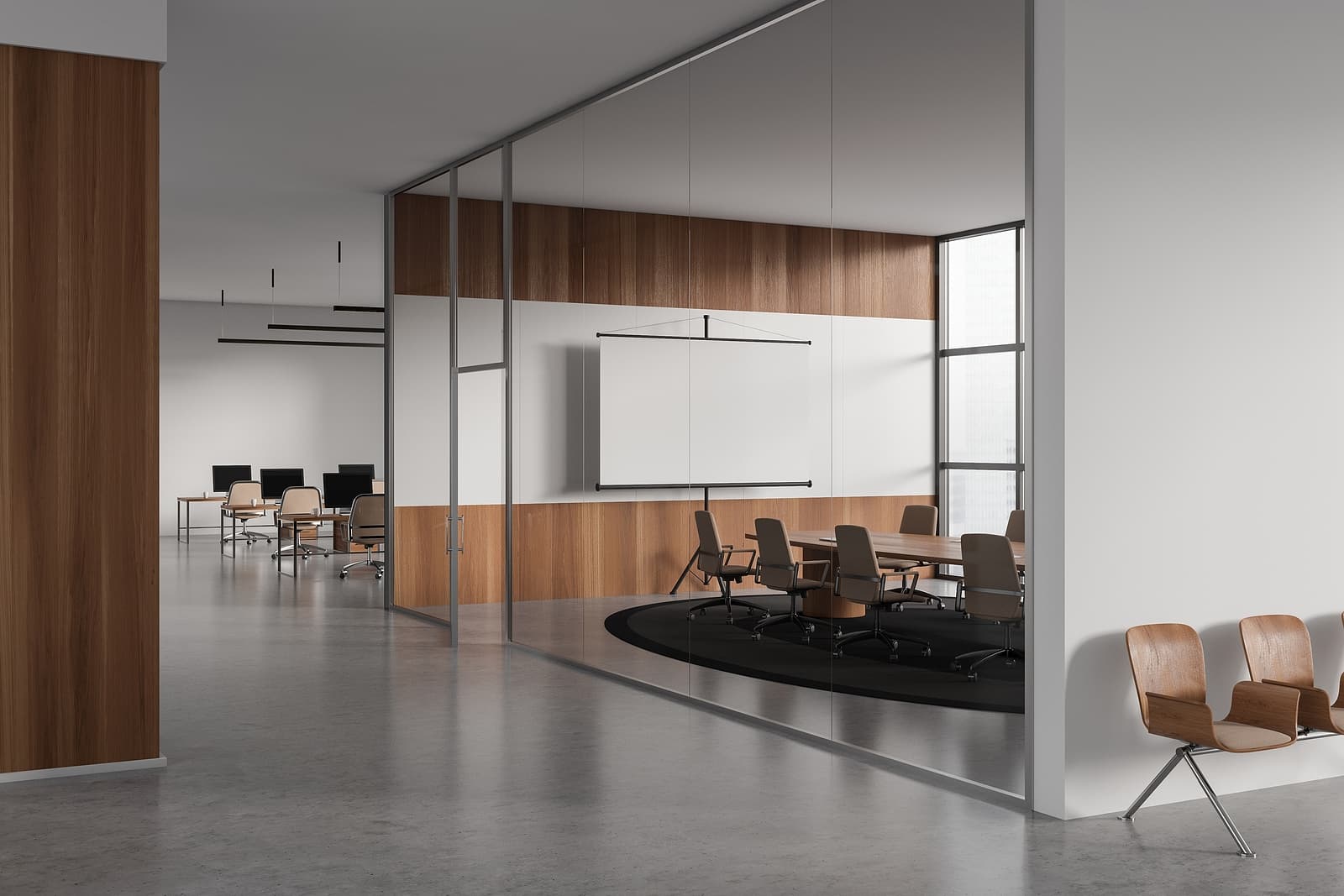
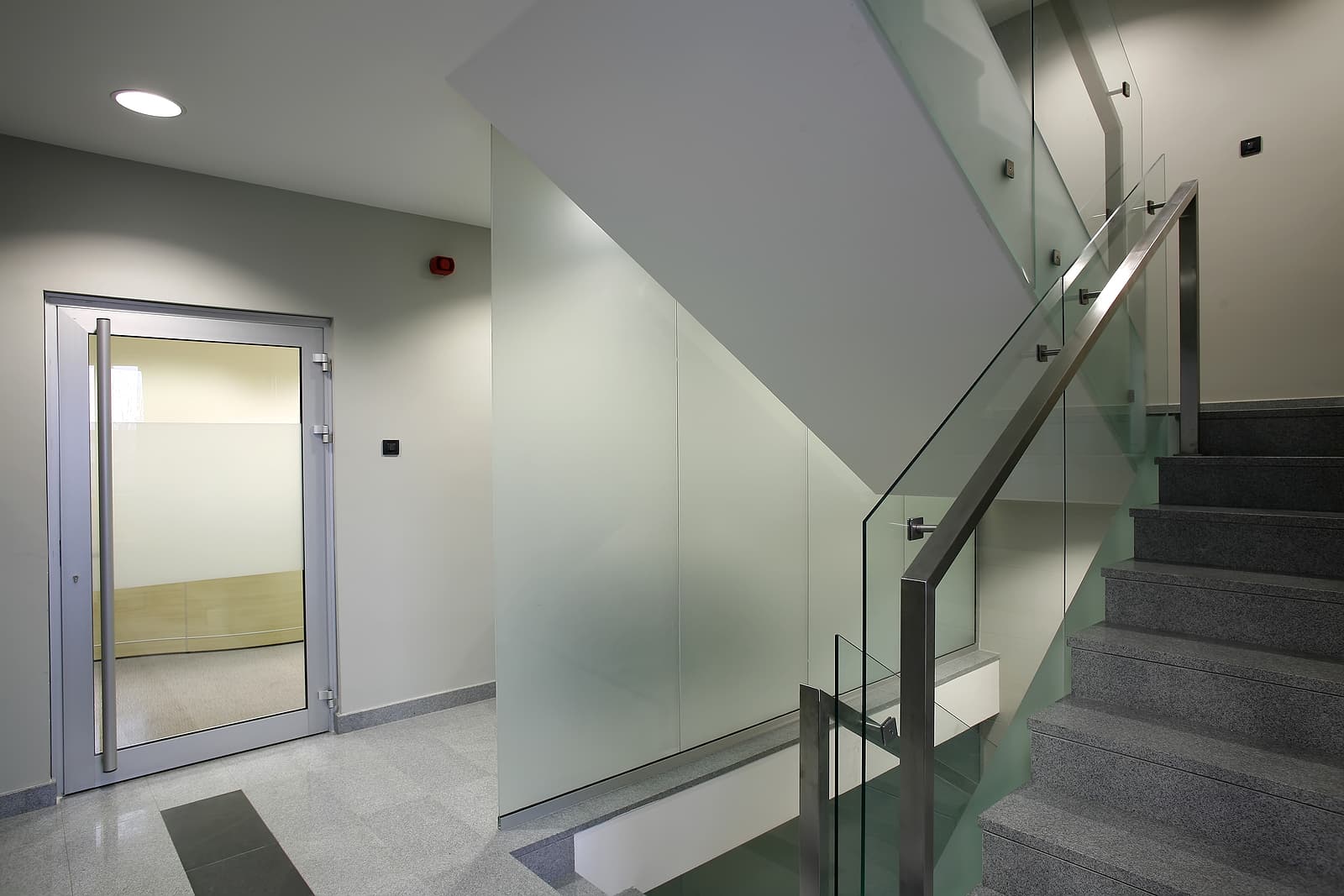
Your glass partition needs to incorporate thicker glass than a typical window, with the typical thickness ranging from 10mm to 13.5mm depending on lamination, purpose, expected traffic and any confounding elements to the design.
By design, structural glass needs to be thicker, stronger and more structurally sound than the glass used for picture frames or glass windows, but exactly how thick this needs to be depends on the type of glass used, the dimensions of the room and the nature of your workspace.
Why Do Glass Partitions Need To Be Thicker?
The beauty of architectural glass is that it is not a singular material, and any glass with a structural purpose needs to be thicker in order to be more robust and fit for purpose. A thin sheet of window glass is unlikely to be suitable when walking around an office.
Here are just some of the main reasons why partitions need to use thicker glass.
Better Safety
Thicker, stronger glass is unlikely to break when bumped against, which is vital in an office where people are constantly moving around, where furniture might move against it, and there is always the risk, however slight, of someone tripping or slipping.
Thicker glass is designed to be as strong as any other partition or cubicle wall, giving building managers and employees peace of mind.
Sound Insulation
The thicker the glass, the better the insulation of sound, something that is vital in open-plan offices where too much sound can affect the privacy of meetings and confidential phone calls.
Office noise is a common problem in open-plan offices, but thicker glass partitions can help to cushion this somewhat.
Warmth
The thicker the glass, the better the insulation, something that is vital in open plan settings where the temperature of air conditioning may be set differently in different parts of what is effectively the same room.
Transparency Options And Aesthetics
Thicker glass gives you more options, whether you opt to frost glass panels in order to maximise privacy, go fully opaque or go for a more fascinating prismatic look to your glass doors, windows and partitions.
What Affects The Thickness Of A Glass Partition Panel?
Choosing the right thickness of glass is a difficult decision, one made between an architect, surveyor and a structural glass specialist.
In general, glass partition panels vary between 10mm thick for most general uses and 13.5mm for high-traffic areas where long-term robustness is required.
Size
The bigger the room and the bigger the partition panel, the thicker the glass needs to be in order to support its own weight.
Modern structural glass can be so strong that it can span the entire length of a room or building as long as it is thick enough and installed correctly.
Type Of Tempering
The most common type of partition glass is tempered, where the glass is treated using heat to boost its strength and ensure that it breaks into small pieces rather than dangerous shards.
Different types of tempering have various strengths and structural purposes, with some being significantly stronger than others.
Type Of Lamination
As well as this, many types of partition glass are laminated, with a special adhesive layer used to increase its strength and to ensure it does not shatter if broken.
Lamination boosts strength, but it inherently adds additional thickness to the glass.
Safety Standards
Any structural element of your building must conform to relevant building regulations, particularly if there is a risk of damage caused by earthquakes, strong man-made vibrations or other risk factors.
Some types of glass are better suited to withstand uneven environmental conditions than others, and working with a surveyor and glass specialist can ensure you get the right glass for your office design.
Budget
The thicker the glass and the more treatment and lamination layers applied to it, the higher the cost per square metre.
Opting for the thickest glass possible rather than designing around your needs and risks can be expensive, and it is essential that you know what you want to get out of your commercial space before you select which glass you want to use.
Traffic
The more people you expect to travel in and around a room, the stronger and thicker you will want your glass to be in order to avoid the accumulated stresses causing a failure at some point in the structure.
Purpose
Glass partitions are used in various ways by different commercial buildings, from shop fronts and showrooms to meeting rooms and breakout spaces.
Know what you want and what such a room needs in terms of safety and function, and order glass based on those requirements.