The blueprint for the modern world was originally sketched much earlier than many people expect, and this is particularly true when it comes to glass structural components.
For the last half-century, the focus of modern office and home design has been the importance of daylighting, where buildings are designed to let as much of the sunshine in as possible.
This includes not only heavy uses of curtain walling and windows, but also the installation of glass partitions, balustrades and even staircases, with heavily strengthened glass used to create bright, open spaces perfectly suited to creativity and purpose.
The best way to illustrate why this is so important and has been for decades is to explore a century-old house of glass described by The New York Times as the “best” house in Paris, but also a remarkably unusually influential building that has had an outsized effect in shaping how we build today.
Why Use Glass Structural And Architectural Components?
Glass is a remarkable architectural material, as whilst it is associated with beauty and delicacy, it is extraordinarily strong in certain formulations and to specific specifications.
A glass staircase can only function if it is designed to be strong enough to take the weight and strain of a conventional staircase, and as many walk-on floors have shown, glass can be constructed to an astonishing strength.
Glass provides a considerable amount of daylight, but it can also be designed to combine that with a degree of privacy and shade through the use of frosting finishes and layers, providing a level of versatility perfect for a wide variety of building types.
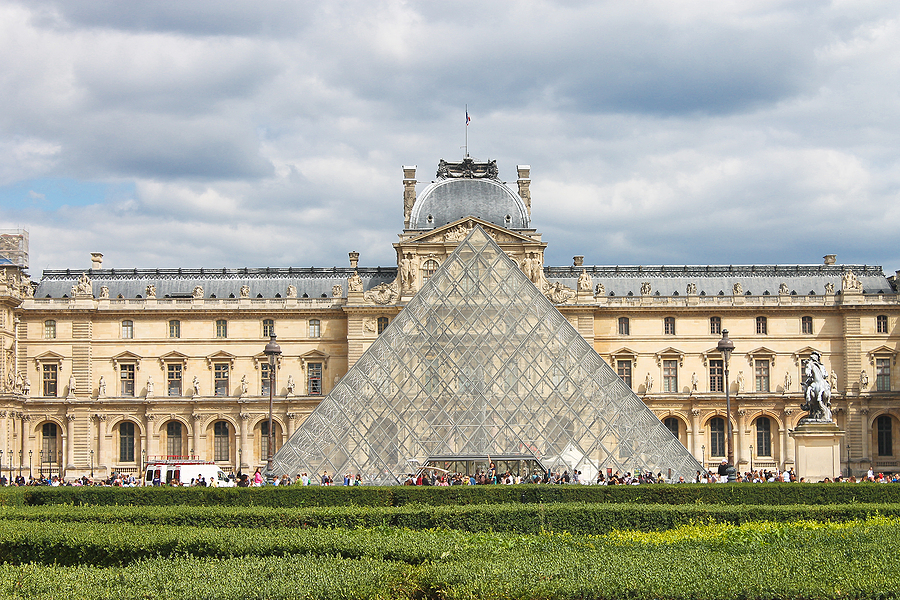
An early pioneer who knew the importance of light in architecture all too well was the architect behind one of Paris’ most famous glass buildings outside of the Louvre Pyramid.
Why Was the Maison De Verre Made Of Glass?
The Maison de Verre (Crystal House or House of Glass) is a remarkably pivotal moment in the history of modern architecture, built on a series of principles that would ultimately shape the built world as we know it today.
Built from a now-familiar combination of steel, glass and concrete, its most notable design feature is its prominent use of glass brick, an early form of structural glass.
The intention of the architectural team behind it was to create a “light box” style design that ensured that natural light would diffuse into the building regardless of the time of day and the position of the sun.
As well as this, it was built on three core principles which relate to the decision to use glass so extensively.
- Variable transparency, which leads to the use of glass with various opacities and traits.
- Honesty of materials, which is a fundamental philosophy behind modern architecture that emphasises a “form follows function” approach to design.
- A combination of traditional home decor with industrial materials, predating the industrial interior design style.
Unusually, only the first three floors of the building are designed in this way; an elderly tenant refused to move out, and so the entire building was constructed underneath without disrupting the top floor.
Who Built The Paris House Of Glass?
The Maison de Verre was the collaborative work of three men:
- Pierre Chareau, lead architect, interior designer and furniture builder.
- Bernard Bijvoet, a fellow architect who had introduced daylighting-focused architecture to the Netherlands.
- Louis Dalbet, artisan metalworker.
All three designers had similar but slightly different interpretations of the brief, with the signature glass brick facade likely a combination of Mr Bijvoet’s existing work on the Zonnestraal estate and the stark profileand focus on movement found in Mr Chareau’s Beauvallon and concept designs.
Motion and flexibility were a critical part of Mr Chareau’s design ethos, using screens of various materials to transform a single open plan space into a multipurpose living, working and socialising environment perfect for the house’s owners.
Whilst not uncommon today, particularly in open-plan offices where rooms are segmented by glass, it was revolutionary for the time and allowed the owners to make the most of every inch of space.
What is perhaps even stranger is that whilst Mr Bijovoet continued to design a number of buildings based on his open-plan glass principles until he died in 1979,
Mr Chareau would only work on two more buildings before he died in 1950, having fled Paris in 1940 and struggled to rebuild his business or his life.
Who Lived In The House Of Glass?
Almost as fascinating as the architects who designed the House of Glass was the patron and eventual homeowner, gynaecologist Dr Dalsace. He would not only live there but use the ground floor as his clinic, requiring the use of multiple rotating panels which concealed the rest of the house during the day but framed it at night.
As well as his work commitments and his family, Dr Dalsace also had a remarkably large social life. As a member of the French Communist Party and an avowed anti-fascist, he would regularly host a litany of surrealist poets, modern artists (including Pablo Picasso), and Marxist philosophers.
One of these, Walter Benjamin of the legendary Frankfurt School of critical theory, was so enraptured by the house that it fundamentally changed his philosophical beliefs.
Inspired by the Glass Architecture theory of Paul Scheerbart, he believed that open glass environments had the potential not only to transform skylines but society as a whole.
This was most notably seen in his essay Experience and Poverty, where he discusses the concept of glass houses directly.
The Dalsaces fled Paris at the same time Mr Chareau did in 1940, and it remarkably survived the Second World War, in part because German soldiers had no idea how to use the building.
Why Was It So Influential On Modern Glass Design?
The Maison De Verre is an exceptionally unusual house and building, but one that ultimately proved far more influential than anyone perhaps expected.
The idea of open-plan, versatile and segmentable interior design would ultimately inspire the Office Landscape (Burolandschaft) office design language, which also led to the development of glass partitions.
It proved the social and professional benefits of daylighting in a way that had not been realised before, demonstrating the value of maximising light where possible.

