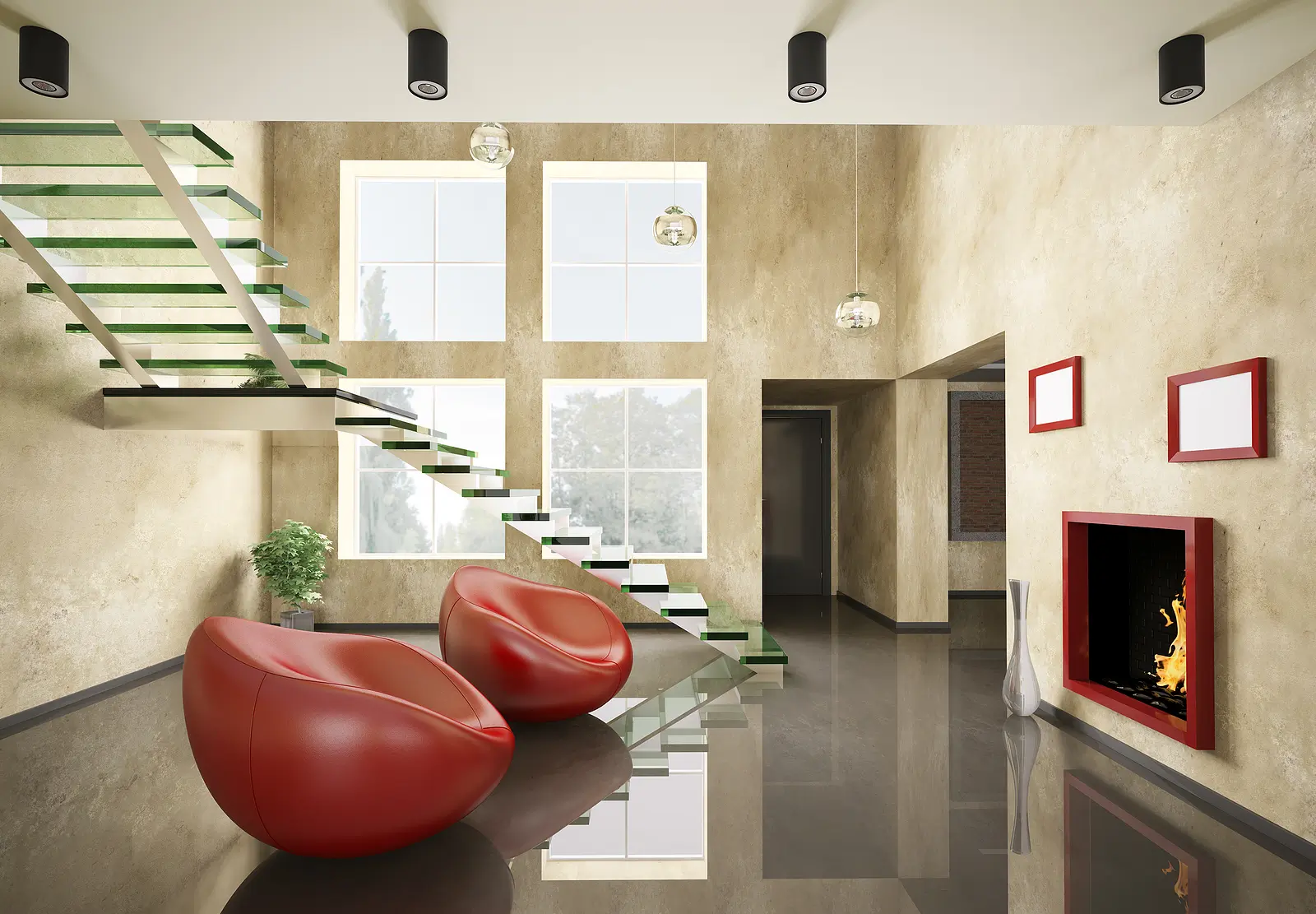
The development of structural glass has evolved to the point that there is almost nothing that cannot be done with suitably manufactured glass panes.
Translucent office partitions, glass staircases, glass brick walls and even the structures of entire buildings can be made using glass, and because of its versatility, a lot of modern offices rely heavily on glass alongside steel and concrete.
There are two major reasons for this; the first is that glass allows for structured office settings but without blocking out the natural light that is so necessary for the effective and comfortable function of employees.
The other part is that glass is an exceptionally versatile material, which can be manufactured in multiple colours, levels of opacity, thicknesses, shapes, designs and with functionality tailored for its purpose.
However, one of the more unusual trends in interior design in recent years is cracked ice glass. As its name suggests, this is a type of tempered glass where the middle layer is deliberately cracked to create a unique, distressed yet sophisticated-looking effect.
How Is Cracked Ice Glass Made?
The basic principle of cracked glass is similar to the production of other tempered glass panes, in that multiple layers of glass are sandwiched between laminate layers and treated to increase their strength and make them more useful for use on tables, partitions and staircases.
The difference with cracked ice glass is that the central layer of the glass is deliberately damaged after being treated and laminated. This breaks the glass into a sheet of tiny fragments that are then sandwiched between two other laminated and strengthened layers of glass.
Alternatively, the layers are tempered and stuck together first, with a carefully calibrated CNC machine used to shatter the middle layer precisely.
The result of this is glass that is exceptionally strong and yet looks distressed and shattered, with a look similar to when ice cracks and refreezes. The individual pieces refract light in different directions, creating extra light and extra privacy.
Despite being a relatively new trend, there is a lengthy historical precedent for this that dates back to the early days of modern glass blowing in Venice.
Much like ice and indeed modern car windscreens, Venetian glassmakers found that if the hot glass was suddenly dunked into cold water, it would shatter due to the thermal shock, at least according to advice from the RAC.
Whilst this sudden and violent shattering can be devastating if you do not know it is going to happen, skilled artisans took advantage of this quickly, dunking the glass quickly before reheating it, creating the cracked look but also allowing for further moulding and sealing to make a quality, elegant product.
This technique spread alongside the rest of the Venetian glass industry’s secrets and even managed to see a revival in the early 20th century alongside other vibrant and unique glasswork, only finally fading away in the 1960s.
Creating this look using traditional glass-making methods is a relatively rare craft, if not a lost art entirely, but technology has helped to fill in the blanks and revive the style for another generation, either through reproductions of older designs using glass moulding or through cracked glass sheets.
Why Has It Become So Popular?
The idea of people actively seeking out broken glass can come as a surprise, at least until they see how it looks, feels and catches light sources.
Due to the inherently chaotic nature of shattering glass, ice-effect glass looks unique. No two panes look alike, and the result is creative and artistic, standing out immediately as soon as you step into a room with it.
It is often compared to stained glass, and much like the revered historical and artistic technique, cracked ice glass can be tinted and be available in multiple colours.
When it comes to practical use in offices, the primary benefit is similar to that of frosted glass, in that it allows light without compromising privacy, both of which are key for office workers to feel most comfortable and thus work at their best.
It can also be used in exceptionally striking ways, with a particularly unusual form of cracked ice glass being used for glass flooring. The reason for this is that whilst exceptionally tough and safe, there is an uncanniness to walking on a floor reminiscent of broken glass.
In practice, due to the lamination, adhesion and multiple layers, cracked glass is exceptionally safe. It is very difficult to break in the first place, particularly robust against heavy accidental impacts and will not shatter or crack in dangerous ways even if it did break.
The tough glass is also as much as six times stronger than a conventional glass pane, with the longevity required to thrive in any high-traffic environment.
It can be used for glass stairs, desktops, kitchen work surfaces, tabletops, doors, splashback and even curtain wall cladding, such is its strength.
Whilst its biggest appeal is its decorative style, it is also functional and aesthetically pleasing enough to suit any business use.
What Is Overshot Glass?
A similar albeit slightly different approach to cracked glass is overshot glass, and whilst it originated at the same time and within the same glassmaking culture, its history and techniques since then are slightly different.
Unlike cracked glass, which was traditionally made through thermal shock and reset, overshot glass involved the use of ground-up glass shards placed on a marver plate.
A glassmaker would then take a molten glass orb and roll it over the glass shards before finally being heated again to melt the sharp edges and complete the piece.
Sometimes both techniques were used, and part of the reason why the terms are used interchangeably is because some pieces are both overshot and cracked glass at the same time.
Other techniques that were sometimes used for the same effect include etching with acid or using a sandblaster, and whilst it was almost exclusively used aesthetically in 2024, it was also a historically creative way to use defective batches of glass.
All of these methods produce some unique results, which could perfectly suit the aesthetics of certain offices.