One of the most important lessons to learn from architectural marvels made from glass is that almost anything is possible in bespoke glazing design.
With buildings that range from the Oriel Chambers in Liverpool to the Louvre Pyramid, structural glazing is as awe-inspiring as it is incredibly practical and effective.
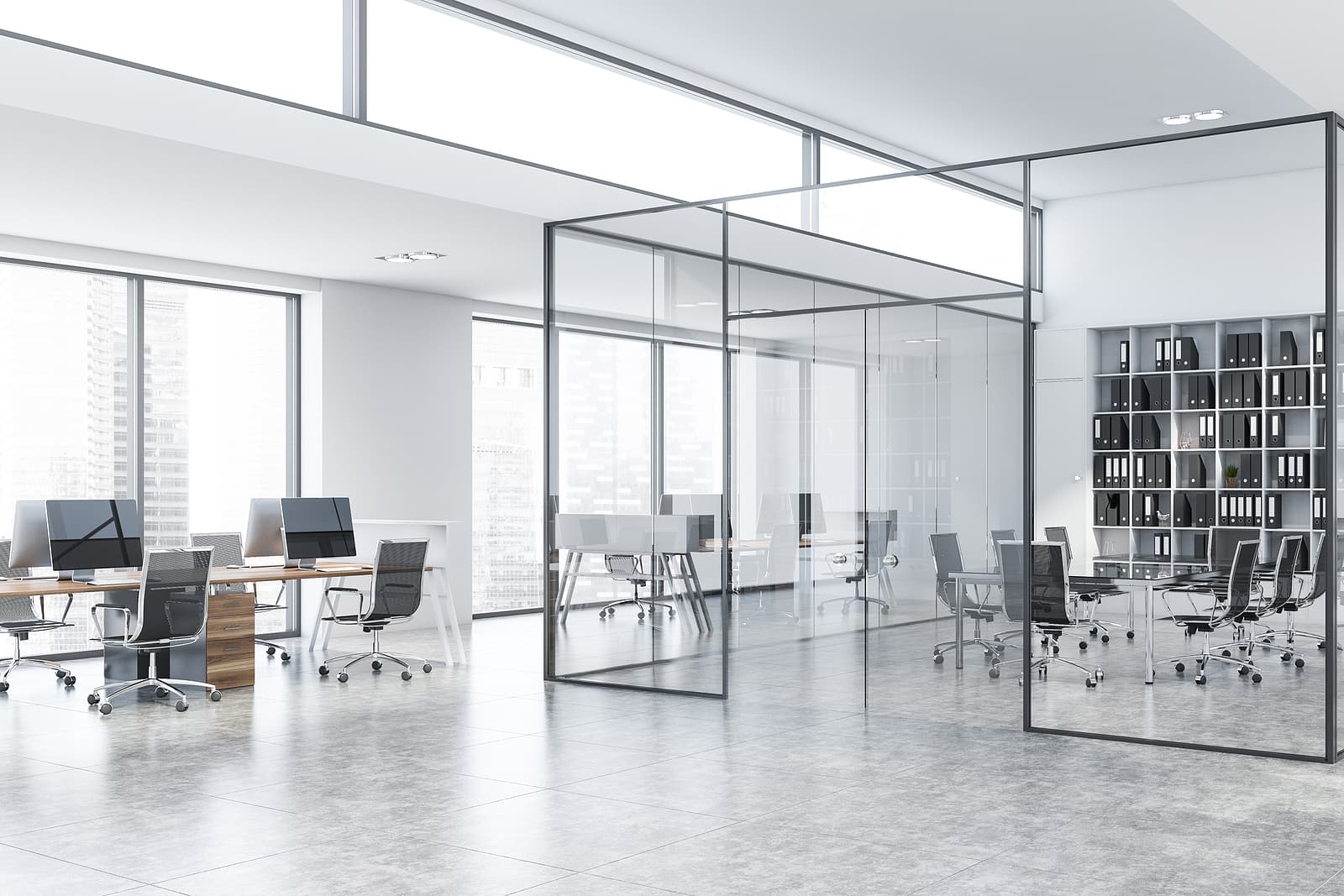
Inherently useful for daylighting, the goal of glass design is to provide as much natural light as possible whilst maintaining the structure, privacy and versatility needed for an effective business space.
One of the earliest and grandest buildings that managed to do this effectively tragically no longer exists, but the legend of The Crystal Palace is so strong that we can still learn so much from both its creation and its shocking and dramatic immolation.
What Was The Crystal Palace?
The Crystal Palace was, when constructed in 1851, the largest plate glass structure in the world, constructed initially for the Great Exhibition, the first ever World’s Fair that showcased the exceptional progress made during the Industrial Revolution.
Due to the chaos surrounding the development, planning and agreement of the Great Exhibition, the building needed to be temporary, economical and simple in design.
However, as with many “temporary” glass buildings, the wonder and awe that The Crystal Palace evoked meant that it lasted for 85 years before being destroyed by fire in 1936.
Both the success of its construction and the shock of the fire provide lessons for using glass in architectural and interior design.
Who Built The Crystal Palace?
The Crystal Palace was built by Joseph Paxton, then considered to be the best and most prodigious of gardeners of his era.
It was initially inspired by two pioneering early glasshouses which predate the Golden Age of Conservatories.
The first was the Great Conservatory, Mr Paxton’s own conservatory design at Chatsworth House. The largest glass building in England once constructed, it was a marvel of engineering that allowed exotic flowers to grow. It was unfortunately dismantled in 1920 following the First World War.
The other was Anthaeum in Hove, an 1833 grand conservatory project that infamously imploded the day before it was set to open and by 1850 had become an ironic landmark. Mr Paxton allegedly asked if the original designs were available before going it alone.
The initial sketches for the Crystal Palace were penned on blotting paper in 1850 during a meeting with Midland Railway, and more detailed plans were ready within just two weeks.
How Long Did The Crystal Palace Take To Build?
One of the most remarkable aspects of The Crystal Palace is that it took just 190 days to build, something that a BBC News article credits to its pioneering use of British Standard Whitworth screws.
Standardisation was the biggest secret to why The Crystal Palace could somehow be completed ahead of schedule despite the impossibly tight deadline for the building to be ready before the launch of the Great Exhibition.
The design, whilst grand, elaborate and thoroughly striking, was a very early example of modular construction; the plate glass which proved so influential to future grand glass buildings was of a standard size provided by the Chance Brothers to increase production.
Was The Crystal Palace Popular?
Before its construction, the Crystal Palace was derided as a folly. The satirical magazine Punch was credited with coining the name in July 1850 with a tone of mockery.
However, when it was completed and launched, the response was one of sheer awe.
It was not just that The Crystal Palace was the world’s largest glass building of its era, but also because it showcased design concepts that were decades ahead of their time.
The use of lightweight materials and clever lattice frames meant that the vast majority of the building was one clear hall, free of introducing columns.
It even managed to use early and remarkably clever examples of passive heating; given that the single-glazed glass panes could potentially create a greenhouse effect, Mr Paxton used canvas shade cloths and a clever ventilation system which drew hot air up and out of the building.
It was tall enough to house elm trees, with an uninterrupted surface area that had never been seen before and with no need to use artificial lights during the day.
Why Was The Crystal Palace Not Dismantled?
The initial plan was for The Crystal Palace to be a temporary building dismantled at the end of The Great Exhibition, but the astonishing popularity of the building and its incredible influence on future building design meant that this decision was suddenly rather unpopular.
Ultimately, the compromise was to take down The Crystal Palace and move it from Hyde Park to Sydenham Hill. This was only possible due to the standardised construction and extensive use of glass.
The building was expanded further, ultimately making it taller than Nelson’s Column, but this is also when some of the problems began.
Why Does The Crystal Palace No Longer Exist?
Whilst the ultimate destruction of The Crystal Palace was caused by a mysterious fire in 1936, the building had been struggling for nearly half a century up to that point.
Following damage to the building in a gale that was ultimately never fixed, the Crystal Palace struggled to make enough money to repay the considerable expense of repairs and expansions.
One of the biggest problems was that the Crystal Palace was closed on Sundays, the only day many working-class people had free from work.
In 1909, the owners went bankrupt, causing The Crystal Palace to nearly be controversially sold before it was placed into a charitable trust in 1914.
The trust was led by Sir Henry Buckland, who strongly believed in restoring the building, and his tireless advocacy led to works that brought The Crystal Palace back to life.
Tragically, this would all be in vain after the events of 30th November 1936. An explosion in the women’s cloakroom led to a small office fire that very quickly escalated, burning almost the entire building down within hours.
However, the legacy of The Crystal Palace is in its incredible scale, the huge leaps forward it took in glazed design and prefabrication, and how it continues to shape the design of modern office buildings and exhibition halls to this day.