Glass staircases exude a sophistication, making commercial buildings look modern and stylish by just replacing one feature.
Their transparency allows lots of natural light to fill the space, making it appear larger, brighter and more open. It also breaks the barrier between floors, creating an airy atmosphere and making it feel more communal and friendly.
However, one of the concerns some people have when considering removing their existing staircase and replacing it with a glass one is whether it is still a safe option.
Here are just a few reasons why glass used in staircases is incredibly safe.
Tempered glass
Whether you suffer from vertigo or have trouble with your footing, some people worry about putting all their body weight on to glass steps.
However, glass staircases are typically made with tempered glass, which is around four times stronger than regular glass.
It is also designed to withstand lots of traffic, so no matter how many people traipse up and down the stairs, it will remain sturdy and secure.
As tempered glass is long-lasting, it is resistant to scratches and chips, so it is extremely unlikely to deteriorate over the years. This means visitors or employees do not have to start becoming concerned about walking on the glass after a few months or even a few years.
Safety glass
Although the risk of breaking the glass is very small, glass staircases are typically designed so if they do smash, they will shatter into small, round pieces.
This ensures that the risk of injury is much lower, so anyone who is involved in the incident has a better chance of walking away without any major wounds.
Stable
While glass staircases might look fragile, particularly floating stair panels, they are anything but.
In fact, they are very secure and stable, and users feel safe when walking up and down them, even when in a hurry.
Frosted glass
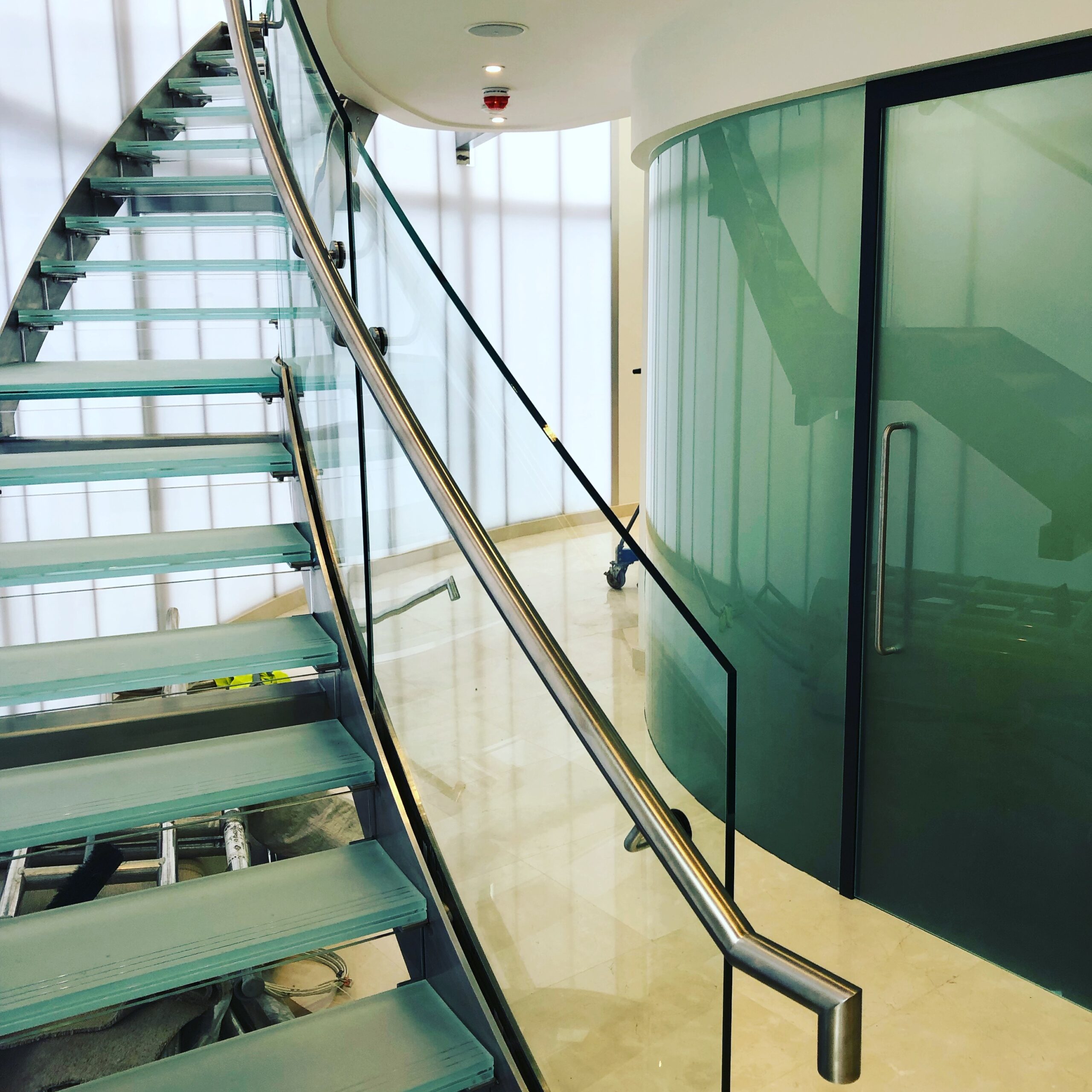
Companies that want everyone to feel as comfortable as possible when ascending or descending their staircases might choose to use frosted or textured glass instead or a clear one.
This means they will not be able to see through the glass step panels as easily, reducing their vertigo and any anxiety they may have over falling, as they can see the stairs more easily.
Frosted glass, therefore, will also help those who are wobbly on their feet, whether due to a visual impairment or issues with balance, making the building more inclusive and accessible to visitors and staff.
According to the Equality Act 2010, UK service providers must make ‘reasonable adjustments’ for disabled people, so it is essential they also have another route to higher floors if they cannot use stairs.
Glass bannisters
An alternative to having glass steps is fitting glass bannisters – glass panels attached to a metal handrail – or a glass balustrade instead.
Either of these can be fitted on to traditional stairs, but they still create the illusion of space and allow natural light from the ground floor to flow upwards.
As the glass means everyone can see the staircase, this makes the room feel much bigger, as it would, otherwise, be cut off by solid panels or bannisters.
They also help to create a seamless transition between the spaces, instead of the staircase blocking visuals for anyone looking around the building.
Alternatively, they could keep their traditional staircase and give the office a contemporary revamp by installing a simple glass stair railing instead. As this allows for an unobstructed view of the entire space, it makes the building feel brighter and lighter without compromising on safety.
Therefore, businesses that want to update their office with a more modern look but want everyone to feel safe and secure might want to opt for one of these options instead.
LED lights on steps
There are also lots of optional features that can be added to the staircases to make them safer to use.
For instance, LED downlights could be fitted on to each step, so they are easier to see, particularly when light is compromised.
Choosing a solid and secure handrail is also a good idea when installing glass steps, as this gives users more security and confidence when walking up or down the stairs.
More hygienic
Although staff and clients do not often consider the hygiene of a staircase, it is important for businesses to think about it.
Glass stairs and rails are easy to clean, as they do not need vacuuming daily like carpeted ones or regularly sanded down like wooden ones. They simply need to be wiped down to remove traces of bacteria and germs.
Consequently, they are more hygienic, which means fewer staff will have to take sick days and businesses will not earn a reputation for uncleanliness or making visitors ill.