Large offices are great for collaboration and staff interactions; they bustle with energy, people and noise. However, when it comes to confidential information and upholding data protection laws, open plan architecture can be tricky.
Not all offices are built with acoustic and visual privacy as a forethought, and organisational needs can change over time. Sometimes, a separate office space is required.
Why is privacy in office spaces so important?
There are different types of privacy that a workplace might require. Some of them are required by law, others are to enable workers to complete tasks more efficiently without distractions.
Digital and Data Privacy
Many businesses work with data that falls within the purview of the Data Protection Act 2018 or UK GDPR. The legislation impacts how and why data is collected, stored and used by organisations.
However, there may be times when that data needs to be accessed, organised, updated or analysed in the office. To prevent colleagues, contractors and clients from seeing this data, it is best used where screens cannot be overlooked.
This can apply to personal and organisational data used in the workplace. For example, client fees, tenders, contracts, other confidential or legal documents, and sensitive or personal data relating to staff.
Confidential Meetings
Conversations about big changes in the business, or privileged and sensitive conversations, are best held where they cannot be overheard or watched.
Difficult conversations, such as interviews and disciplinary actions with employees, might need to take place where they can’t be overlooked and where there are no distractions.
Physical privacy
Privacy is often needed for video calls and for deep focus work. A physically separate space allows for a quieter work environment. Plus, your Teams meetings won’t annoy your colleagues as much.
How can glass partitions make an office more private?
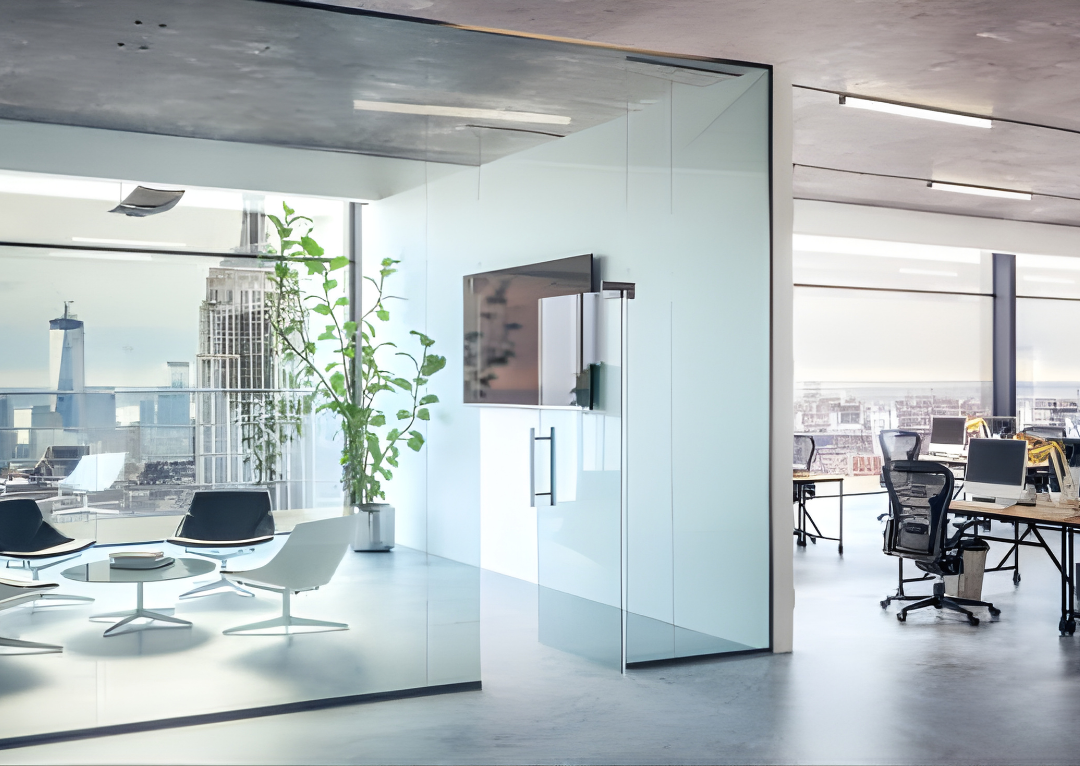
Glass might seem to provide the opposite of privacy. However, different types of glass can divide office space and provide additional privacy.
Partitions made of glass, rather than solid internal walls, can section a workplace to make a more efficient and ergonomic use of space. They can be installed without any major structural changes and fitted to suit an organisation’s needs.
The choice of glazing in partition walls can add a layer of privacy on top of the physical separation.
What types of glazing are used for workplace privacy?
In addition to traditional single-glazing and double-glazing partitions, there are alternative glazing options for your new space.
Tinted or frosted glass
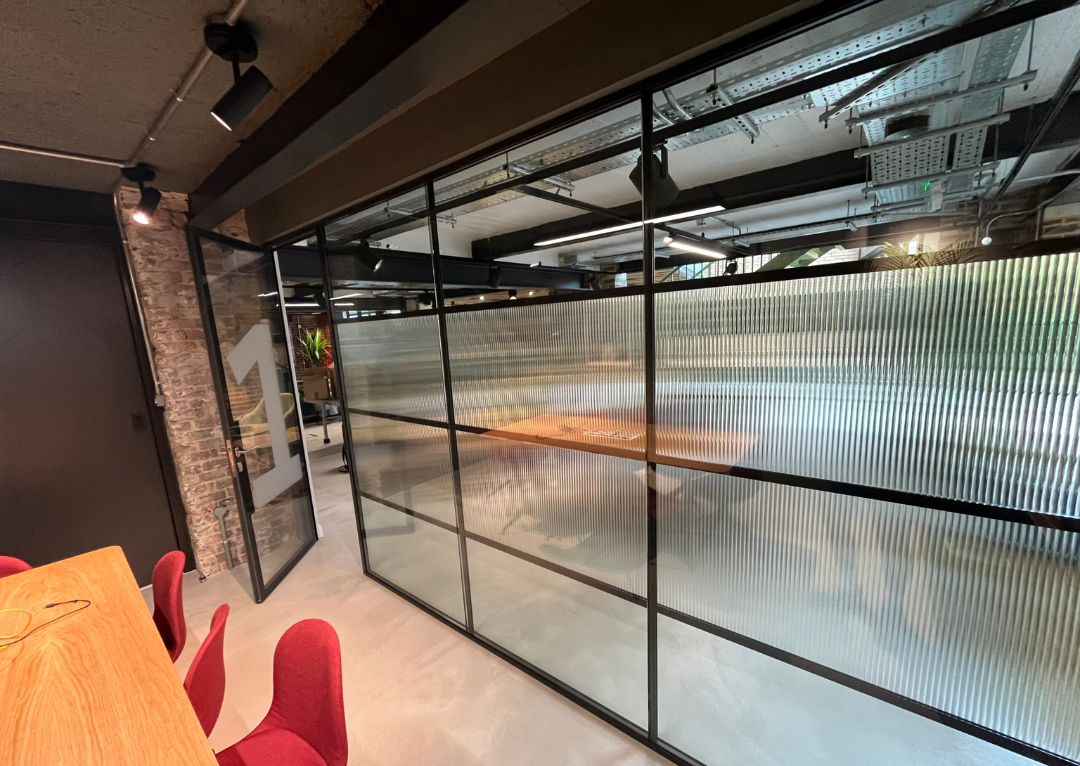
A frosted or tinted glass partition wall can create a sense of privacy without blocking all natural light. With a banded glass partition, it can be partially frosted or tinted.
A compromise with waist-height frosting can provide a partial physical privacy for colleagues at desks while allowing light to enter the space uninterrupted at head height.
Integrated blinds
These are partitions with blinds built into double-glazed units. It allows for physical privacy when needed.
Shallow blinds are sealed between toughened glass, and a switch mechanism between partitions allows them to be opened and closed.
Being integrated, there is little maintenance involved to keep them clean, and they are less likely to be damaged by overuse and accidents.
Switchable glass
A high-tech alternative to frosted glass or integrated blinds, this switchable glass is also known as smart glass.
It uses polymer dispersed liquid crystal in its construction, which allows it to change from frosted to transparent. An electrical current activates the crystal, instantly changing the opacity of the glass.
The smart glass is useful for meeting rooms and breakout areas that don’t need to be private all the time. It can also be useful for bright days when screen glare in the office is an issue.
The glass is tempered and strong, offering a durable and safe solution.
Acoustic glass
Acoustic glass is a specialist type of glazing that gives more soundproofing than standard double- or single-glazed units.
It is created through a lamination process where the middle film between two panes is an acoustic interlayer, usually made of polyvinyl butyral. The film reduces noise transmission through the glass by absorbing vibrations.
Different thicknesses of acoustic glass are available for installation, measured in decibel ratings.
Sound-damping gives more audio privacy for phone calls, video calls and confidential meetings. It can also help provide workers with a quieter space if they need to focus or have noise sensitivity issues.
What are some different uses for glass partitions in offices?
Glazed partitions can provide both visual and acoustic privacy for employees, clients and contractors. Exactly how they are installed will depend on the layout and space requirements.
They can be used to create new meeting spaces and breakout rooms. Or use them to furnish an open plan area with individual bookable pods for video calls. Executive offices can be built using glass walls in a way that still allows them to be part of the wider team.
Separating off an open kitchen area can not only reduce the sound of kettles and microwaves but also minimise food smells.
Using glass partitions can transform an office, making it more comfortable to use and providing essential privacy for data protection in the workplace.