Modern meeting rooms need to balance privacy, collaboration, natural light, compliance, energy efficiency and aesthetics. Glass office partitions have become one of the most popular solutions for commercial buildings.
Internal glass walls create dedicated meeting spaces without sacrificing openness or daylight. They can improve workplace flexibility, support hybrid working environments, enhance professional appearance, and help maximise the use of available floor space.
Whether you are planning a new office fit-out, refurbishing an existing workplace, or constructing a commercial building from scratch, understanding office partitioning options can help you create functional and future-proof meeting rooms.
What is a glass partition wall?
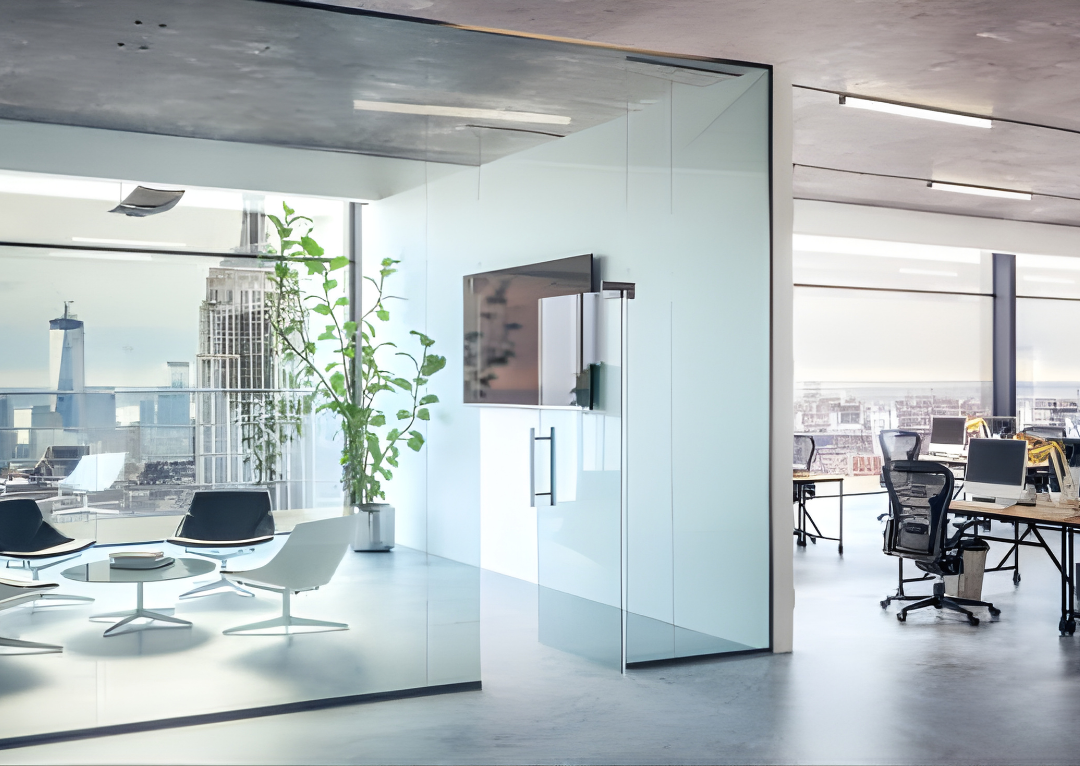
A glass partition wall is a non-load-bearing internal wall made primarily from glass panels. It is used to divide office space into separate areas while maintaining visibility, natural light, and a sense of openness.
Unlike traditional plasterboard walls, glass office partition walls allow light to travel throughout a building, helping create brighter and more inviting workspaces.
Common applications include:
- Meeting rooms
- Boardrooms
- Executive offices
- Breakout areas
- Reception areas
- Training rooms
- Collaboration spaces
- Internal corridors
Glass partitions can be installed as permanent structures or as demountable systems that can be reconfigured as workplace requirements evolve.
Why balustrades and partitions are essential for modern office spaces
Modern workplaces have changed dramatically over the past decade.
Businesses increasingly seek environments that support:
- Collaboration
- Employee wellbeing
- Flexible working
- Energy efficiency
- Professional appearance
- Space optimisation
Glass partitions and balustrades help achieve these goals by creating distinct zones without making the workplace feel enclosed.
Key benefits include:
Improved natural light
Research consistently shows that access to natural daylight improves employee wellbeing and workplace satisfaction. Glass partitions allow daylight to penetrate deeper into office interiors compared to solid walls.
This can help create a brighter, more welcoming environment while reducing dark or enclosed areas within the workplace.
Increased exposure to natural light has also been linked to improved mood, reduced eye strain, better concentration, and a more comfortable working atmosphere throughout the day.
Benefits may include:
- Reduced reliance on artificial lighting
- Lower electricity consumption
- Improved workplace comfort
- Enhanced productivity
Better space utilisation
Commercial property costs continue to rise, making efficient use of floor space increasingly important.
Office partitioning enables organisations to:
- Create meeting rooms
- Add private workspaces
- Build collaboration zones
- Establish quiet areas
Without extensive structural alterations.
Professional appearance
Glass office partitions create a contemporary and high-end appearance that appeals to:
- Clients
- Visitors
- Employees
- Investors
They communicate transparency, professionalism, and attention to design.
Increased safety
Balustrades provide critical protection on:
- Staircases
- Mezzanines
- Atriums
- Raised walkways
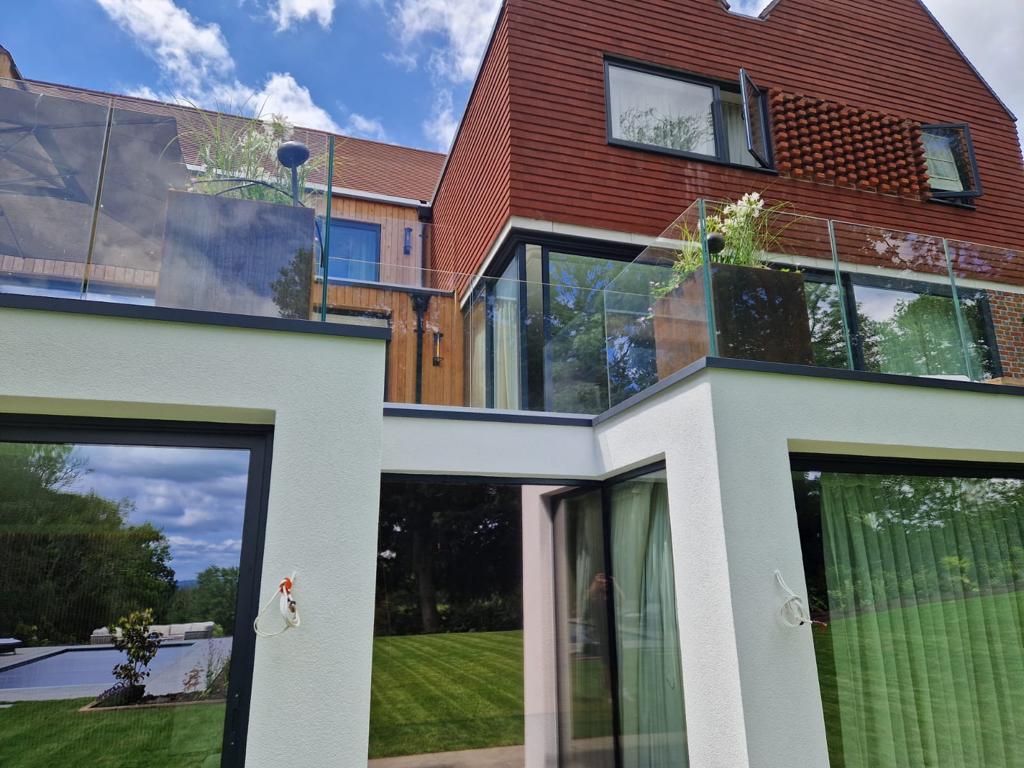
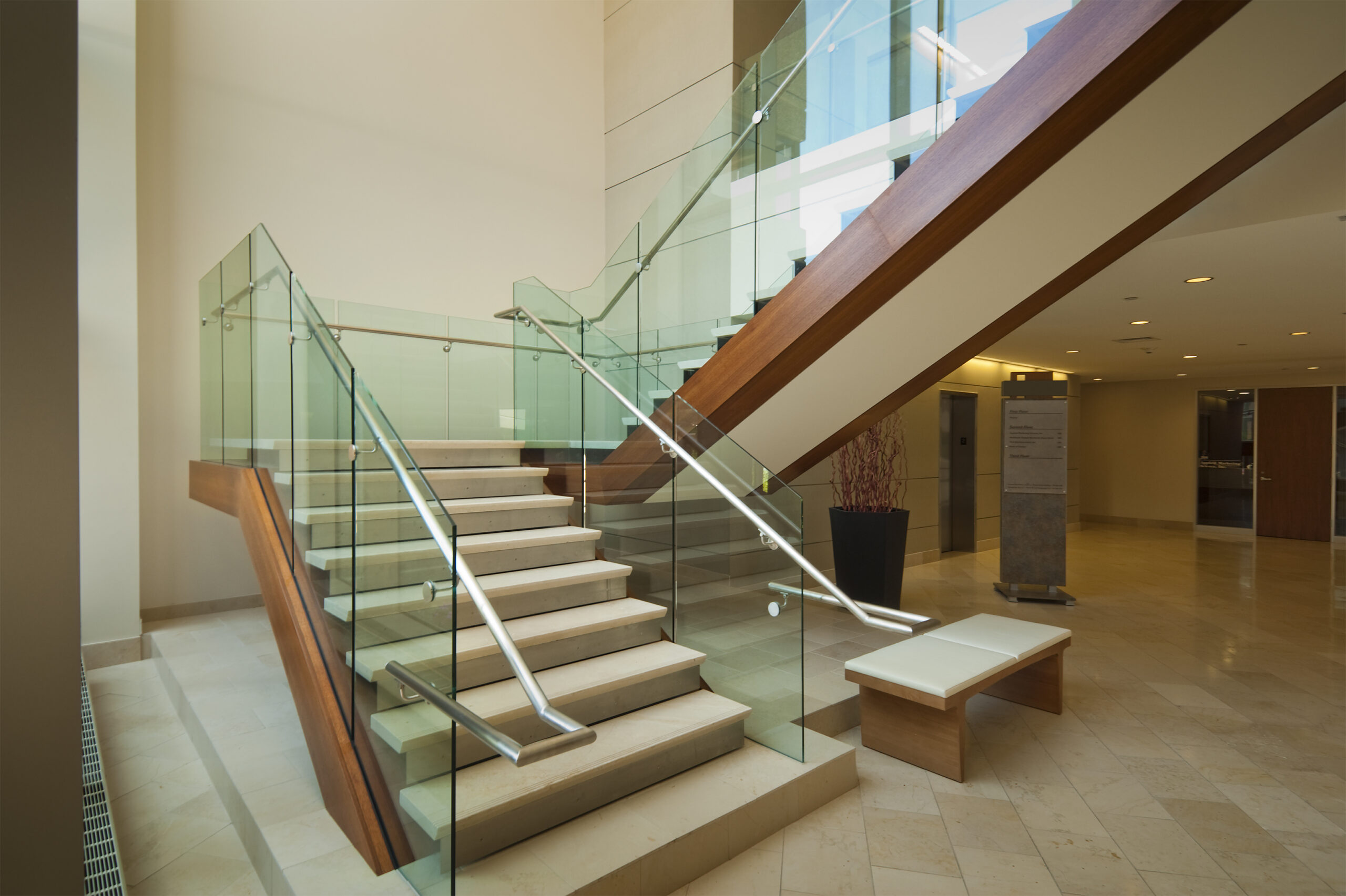
Modern glass balustrades combine safety with unobstructed views, making them particularly popular in contemporary office developments.
How many types of glass partitions are there?
There are several types of glass office partition walls available, each offering different levels of privacy, acoustics, and visual impact.
Single glazed partitions
Single glazed systems use one layer of toughened or laminated glass.
Advantages include:
- Cost-effective installation
- Excellent light transmission
- Minimalist appearance
- Easy maintenance
Best suited for:
- General offices
- Collaboration spaces
- Reception areas
Double glazed partitions
Double glazed partitions use two layers of glass separated by an air gap.
Benefits include:
- Improved acoustic performance
- Enhanced privacy
- Better thermal performance
- Premium appearance
Ideal for:
- Boardrooms
- Executive offices
- Confidential meeting rooms
Frameless glass partitions
Frameless systems create a sleek and modern aesthetic.
Benefits include:
- Minimal visual interruption
- Maximum transparency
- Contemporary appearance
- Premium finish
These systems are particularly popular in modern corporate environments.
Framed glass partitions
Framed partitions incorporate aluminium framing around glass panels.
Advantages include:
- Additional structural support
- Various colour finishes
- Strong visual definition
- Cost-effective solutions
Acoustic glass partitions
Acoustic systems are specifically engineered to reduce sound transmission.
Suitable for:
- Conference rooms
- HR offices
- Legal firms
- Financial institutions
Some high-performance systems can achieve acoustic ratings exceeding 50dB.
Switchable privacy glass
Also known as smart glass, this technology changes from transparent to opaque at the touch of a button.
Benefits include:
- Instant privacy
- Modern appearance
- Flexible meeting spaces
- Reduced need for blinds
Which office partition is best: Glass or aluminium?
This is one of the most common questions asked during office design projects. The answer depends on your priorities.
Glass office partition advantages
- Maximises natural light
- Creates open feel
- Modern appearance
- Supports collaboration
- Enhances workplace wellbeing
Aluminium office partition advantages
- Lower initial cost
- Greater visual privacy
- Robust construction
- Easy integration of solid panels
Aluminium framing with glass panels: the best of both worlds
Many modern office partitioning systems combine aluminium framing with glass panels.
This approach provides:
- Structural strength
- Modern aesthetics
- Excellent functionality
- Flexible design options
For most contemporary meeting rooms, glass office partition walls are typically the preferred solution because they combine privacy with openness.
Residential and commercial glazing: What’s the difference?
Although glazing principles remain similar, commercial glazing requirements are generally far more demanding.
Residential glazing
Typically focuses on:
- Energy efficiency
- Security
- Appearance
- Thermal comfort
Applications include:
- Windows
- Patio doors
- Conservatories
Commercial glazing
Commercial projects often require consideration of:
- Fire safety
- Acoustic performance
- Structural loads
- Building regulations
- Accessibility standards
- Impact resistance
Commercial glass partitions and balustrades frequently utilise specialist glass products designed to meet specific performance requirements.
Are you complying with commercial glazing regulations?
Compliance is a critical aspect of any commercial fit-out or construction project. Commercial glazing installations may need to satisfy various regulatory requirements.
Areas commonly assessed include:
Safety glazing
Certain locations require:
- Toughened glass
- Laminated glass
- Safety-certified glazing
To reduce injury risk.
Fire safety
Some partitions may need:
- Fire-resistant glass
- Fire-rated framing systems
- Compartmentation compliance
Depending on building layout.
Accessibility
Office environments must often accommodate accessibility requirements, including:
- Manifestation markings
- Door visibility
- Accessible circulation routes
Structural performance
Glass balustrades must withstand specified loading requirements to ensure user safety. Professional design and installation are essential for compliance.
Energy Performance Certificates for commercial buildings
Energy Performance Certificates (EPCs) play an important role in commercial property management. An EPC measures the energy efficiency of a building and assigns a rating from A to G.
The certificate evaluates factors including:
- Insulation
- Heating systems
- Lighting
- Ventilation
- Building fabric performance
Why EPC ratings matter
A stronger EPC rating can provide benefits such as:
- Lower operating costs
- Improved tenant appeal
- Better environmental performance
- Enhanced asset value
As sustainability becomes increasingly important, many organisations seek workplace improvements that contribute to broader energy-efficiency goals.
Are commercial glazing solutions worth the investment?
For many businesses, the answer is yes. Although quality glazing systems involve upfront costs, they can deliver significant long-term value.
Potential benefits include:
Improved employee experience
Well-designed workplaces can support:
- Comfort
- Engagement
- Collaboration
- Workplace satisfaction
Enhanced property appeal
Modern office interiors can make commercial premises more attractive to:
- Tenants
- Investors
- Buyers
Increased flexibility
Demountable partition systems can often be reconfigured as business needs change.
Reduced refurbishment costs
Rather than rebuilding entire spaces, partition layouts can frequently be adapted with minimal disruption.
What is better: separate rooms or open space in offices?
Both approaches have advantages. The most successful modern workplaces often combine elements of each.
Open-plan benefits
- Collaboration
- Visibility
- Communication
- Efficient space use
Separate room benefits
- Privacy
- Concentration
- Reduced distractions
- Confidential discussions
The hybrid approach
Glass office partitioning allows businesses to create meeting rooms and private workspaces while retaining the openness employees often value. This approach combines the strengths of both design philosophies.
Should we have frosted glass doors in our new office?
Frosted glass remains one of the most popular choices for meeting room doors.
Benefits include:
Increased privacy
Occupants feel more comfortable discussing confidential matters.
Professional appearance
Frosted manifestations can create a polished corporate look.
Continued light transmission
Unlike solid doors, frosted glass still allows natural light to pass through.
Branding opportunities
Many organisations incorporate:
- Logos
- Graphics
- Patterns
- Decorative designs
Within frosted film applications.
How to split your office stylishly
Office partitioning should achieve practical goals without compromising aesthetics.
Here’s a good step-by-step guide to consider:
Step 1: Identify workspace requirements
Determine:
- Number of meeting rooms
- Collaboration zones
- Quiet work areas
- Executive offices
Step 2: Assess natural light
Map how daylight moves through the building. This helps position glass partitions to maximise brightness.
Step 3: Choose appropriate partition systems
Consider:
- Acoustic requirements
- Privacy needs
- Budget
- Design objectives
Step 4: Incorporate branding
Use:
- Frosted graphics
- Company logos
- Brand colours
- Feature glazing
To reinforce identity.
Step 5: Future-proof the layout
Choose flexible systems that can adapt to future business growth.
How to partition office space
Effective office partitioning starts with understanding how employees use the workplace.
Create activity-based zones
Examples include:
Focus areas
For concentrated individual work.
Meeting rooms
For discussions and presentations.
Collaboration zones
For team interaction.
Social spaces
For informal conversations and breaks.
Reception areas
For welcoming visitors.
Glass office partition walls make it possible to define these spaces while preserving connectivity throughout the office.
How to make an office partition wall
The exact process depends on the partition system selected.
However, a typical installation involves:
Step 1: Site survey
Accurate measurements are taken.
Step 2: Design development
Layouts and specifications are prepared.
Step 3: Material selection
Choices include:
- Toughened glass
- Laminated glass
- Acoustic glass
- Framing systems
Step 4: Framework installation
Supporting channels and framing are fitted.
Step 5: Glass installation
Glass panels are carefully positioned and secured.
Step 6: Doors and ironmongery
Doors, handles and hardware are installed.
Step 7: Final inspection
The completed installation is checked for performance, appearance and compliance.
Professional installation is strongly recommended due to the specialist handling and safety requirements associated with architectural glazing.
Office partitions vs cubicle office partitions
Traditional cubicles were once the standard solution for workplace organisation. However, many businesses now favour glass office partition systems.
Cubicle office partition advantages
- Individual privacy
- Cost-effective layouts
- Simple implementation
Glass office partition advantages
- Greater natural light
- Improved aesthetics
- Enhanced collaboration
- Modern workplace appearance
As workplace design evolves, glass-based solutions increasingly replace traditional cubicle layouts.
Wall office partition options explained
Wall office partition systems are available in numerous configurations.
Popular choices include:
- Full-height glass partitions
- Half-height partitions
- Aluminium-framed partitions
- Acoustic partitions
- Fire-rated partitions
- Demountable systems
Choosing the right wall office partition system
Selecting the correct wall office partition system depends on several key factors, and taking the time to assess your requirements can help ensure a more successful long-term investment.
- Building requirements should be considered first, including available floor space, ceiling heights, fire safety considerations, acoustic performance needs, and overall workplace layout. Different environments will require different solutions.
- Budget is also important. While some systems offer a lower initial installation cost, higher-specification options such as acoustic or double-glazed partitions may provide greater value over time through improved functionality and longevity.
- Privacy needs will vary depending on how the space is used. Meeting rooms, HR offices, and executive suites often require enhanced visual and acoustic privacy, while collaborative areas may benefit from more open and transparent designs.
- Finally, long-term flexibility should not be overlooked. Demountable and modular partition systems can be reconfigured as teams grow, departments change, or office layouts evolve, helping businesses adapt without the expense and disruption of major refurbishment work.
Internal glass office partitions: A future-proof solution
Businesses increasingly seek adaptable workplace environments that can evolve alongside organisational growth.
Internal glass office partitions offer:
- Design flexibility
- Strong visual appeal
- Excellent light transmission
- Long-term value
- Professional presentation
Whether creating a single meeting room or redesigning an entire workplace, glass partitioning systems help organisations maximise available space while maintaining the open, collaborative environments that modern employees increasingly expect.
Combined with high-quality glass balustrades, these solutions create safer, brighter, and more sophisticated commercial environments that are built for the future.
Meeting rooms remain one of the most important spaces within any office environment. They require a balance of privacy, functionality, acoustic performance, and visual appeal.
Glass office partition walls provide an effective way to achieve these goals while supporting natural light, flexible layouts, and modern workplace design.
From understanding commercial glazing regulations and EPC considerations to selecting between framed, frameless, acoustic, or frosted systems, careful planning can ensure the best possible outcome.
When paired with professionally designed glass balustrades, office partitioning creates commercial spaces that are safer, more productive, and better suited to the demands of today’s workforce.
How Nexaa can help your office redesign
If you’re planning a new office fit-out, refurbishing existing meeting rooms, or exploring ways to make better use of your commercial space, Nexaa can help.
From internal glass office partitions and meeting room glazing to bespoke glass balustrades, our team works with businesses to create functional, modern environments that balance aesthetics, privacy, and practicality.
Contact Nexaa to discuss your project and discover the most suitable glazing solutions for your workspace.