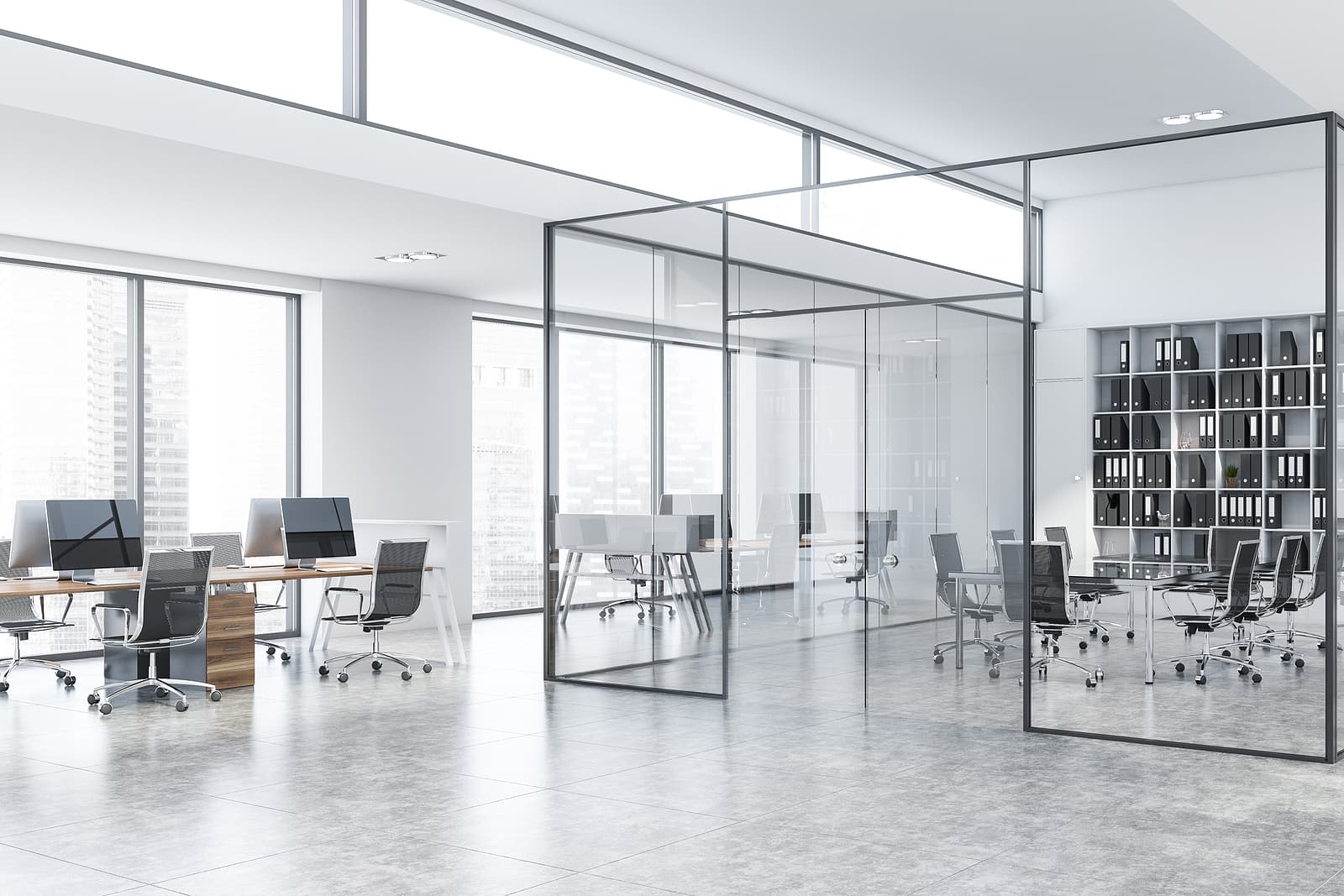
Noise pollution can be a troublesome problem in offices, especially as many have open plan layouts and tend to be used for a diverse range of purposes. An effective solution for many offices is to install glass partitions that make use of soundproofing technology. Acoustic glazing not only acts as an effective sound barrier but also brings other benefits.
Here’s a look at the many reasons why glass partitions are an excellent investment for any workplace interior.
How does soundproof glass work?
Acoustic glass uses two or more panes and also has a laminate utilising Polyvinyl Butyral (PVB) sound dampening layer between the panes. This creates a soundproof membrane that is capable of disrupting the energy of the sound vibrations, resulting in reduced noise transference.
Factors that can influence the effectiveness of the soundproofing include the thickness of the glass, the number of layers and the distance between each layer, and the quality of the seals around the glass. Consider what type and decibel of noise you want to block and what level of quietness you want to achieve when selecting acoustic glazing options.
Uses of soundproof glass in offices
Acoustic glass partitions can be used to create meeting rooms where sensitive discussions might be taking place with clients or between staff members, and confidentiality is paramount. They can also be used to create quiet zones for work that requires deep concentration, or for staff members who prefer to work without disturbances.
The glass partitions can be used flexibly to create zones for collaboration and teamwork, video and teleconferencing, and so on. If some employees spend a lot of time making calls or answering the phone, this can be distracting or stressful for other workers who need to focus on detailed tasks.
By providing a well balanced mixture of confidential zones, collaboration zones, and quiet zones, offices can improve the working environment and boost productivity and motivation among employees. Some people are especially sensitive to noise, particularly if they are neurodiverse, and may struggle to perform their best in a boisterous environment.
Other advantages of glass partitions
Besides soundproofing, glass partitions have several distinct benefits for offices, both functional and aesthetic. Here are just a few further advantages.
Creating a more spacious feel and enhancing natural light
Glass partitions are often a preferable alternative to solid partitions, particularly in smaller offices where they allow natural light to filter through rather than obstruct it. Traditional materials such as plasterboard or brick block light and increase the need for artificial light sources, which drives up energy use and is worse for mental health.
They also create the illusion of more space, making the office environment less claustrophobic and more welcoming for staff and visitors. Glass looks sleek, modern and sophisticated, and if necessary it can be combined with coloured panels or options such as tinted or privacy glass for a greater degree of privacy.
Encouraging a more cohesive workforce
Opaque barriers cut people off from each other and enhance the feeling of distance between levels of management, different teams, or seniority of staff. This can reduce open communication and hinder opportunities for teamwork and understanding how different areas of the business operate.
Glass partitions make staff more visible to each other and this helps to foster a sense of community and creates a less hierarchical work environment.
Customization and flexibility
Glass partitions can be easily reconfigured or combined with sliding glass doors to create flexible layouts. This allows the office space to be quickly adapted to changing demands and staffing levels; particularly useful in the era of flexible and remote working arrangements.
It’s also a very useful feature for businesses with fluctuating demands or varying types of work, allowing for flexibility in the use of space that would not be afforded by more traditional partition materials.
Other safety features
The partitions can be manufactured to meet fire resistance requirements, thus enhancing the safety and security of staff and the office premises.
The fire-rated glass is manufactured to withstand high temperatures, and according to the level of rating it can prevent or resist the spread of fire and noxious smoke and gases for variable amounts of time, allowing for emergency responders to reach the scene and potentially evacuate any casualties.