Although glazing feels like a relatively modern concept, it actually stems back to ancient times.
Here we delve into the history of glazing, and how it has evolved over the centuries, from rudimentary windows to sophisticated, smart fixtures.
Roman times
In fact, glazing in windows was first recorded by the Romans in the first century AD, hoping to let in natural light, provide ventilation to buildings, and block out sound.
They made the glass by blowing a cylinder and then letting it flatten. Although it served its purpose, it was not very transparent.
By 100AD, the Romans had managed to improve their technique of heating sand and mixing it with other materials for the right composition. They then learnt how to press it into smaller pieces, forming it into window panes that could slot easily into holes in the stone.
They even developed double glazing, recognising the thermal and sound benefits of having two layers of glass.
This was achieved by having a thin layer of selenite, which was transparent itself, and placing this in between two panes of glass. Although this method was successful, double glazing was typically saved for bathhouses to trap the heat in.
They were also used for heated buildings so they could stay warm while still letting natural light in through the windows, helping people indoors to perform tasks for longer during the day so they could be more productive and efficient.
Post-Roman era
Although it had been hundreds of years since the Romans invented glazed windows, they were still not commonly fitted into buildings until as late on as the 16th Century. This is because the Romans regarded glass making as a closely-guarded secret.
Therefore, it was not until the fall of the empire in the 5th Century AD that other areas of the world, including Europe and the Middle East, learnt how to make glass, and subsequently, fit windows.
It became more widespread in the UK from as early as the 7th Century, and had spread across most of the country by the 1200s.
During the Tudor period between the 15th and 16th Century AD, wealthy homes began having glass windows, while smaller homes still simply had stone holes that were covered with oiled cloth or paper.
Big windows became popular for those who could afford it, and the larger the window size, the wealthier the family.
Over the century, windows became tall and thin, thanks to influence from the Italian Renaissance. The style of the time was for the glazing to be divided into four sections, and the glazing became almost flush with the exterior wall.
Window tax
Although glass windows could have surged in popularity after this, lots of people who would have otherwise had windows in their house opted against doing so due to a ‘window tax’.
In 1696, William III imposed this levy, ordering people to pay up to eight shillings a year depending on how many windows there were in their homes.
Consequently, lots of homeowners bricked over their windows to save themselves from having to pay this charge. What’s more, it meant there was a delay in more houses with windows being built around the UK.
The tax surprisingly remained for more than 150 years, until it finally ended in 1851.
19th Century revolution
Not only were Brits allowed to have windows in their houses during the 19th Century without having to pay a fee, but this was also a time of glass evolution.
Henry Bessemer invented the technique of continuous plate production to create panes of glass. This meant the thickness of the glass could be standardised.
Improvements in the manufacturing of glass also meant windows became more affordable, and therefore a more common sighting in houses.
Mass glass production in the 1950s
The thing that really changed the history of glazing was being able to mass produce glass windows.
This was achieved with the Float glass process, which involved pouring molten glass over a molten tin and then flattening it out. This meant the glass did not require more polishing or grinding afterwards, so it could be made and shipped far more quickly.
Double glazing surge in the 1970s
It was not long after, in the ‘70s, that double glazing became more and more used in households.
This involved having two panes of glass, which allowed the air to get trapped in between, forming a natural insulator. Subsequently, there is less heat loss, keeping homes warmer during the winter.
Modern glazing uses
Things have developed a lot since then. Not only do the vast majority of buildings and homes have double-glazing, but many are even triple glazed.
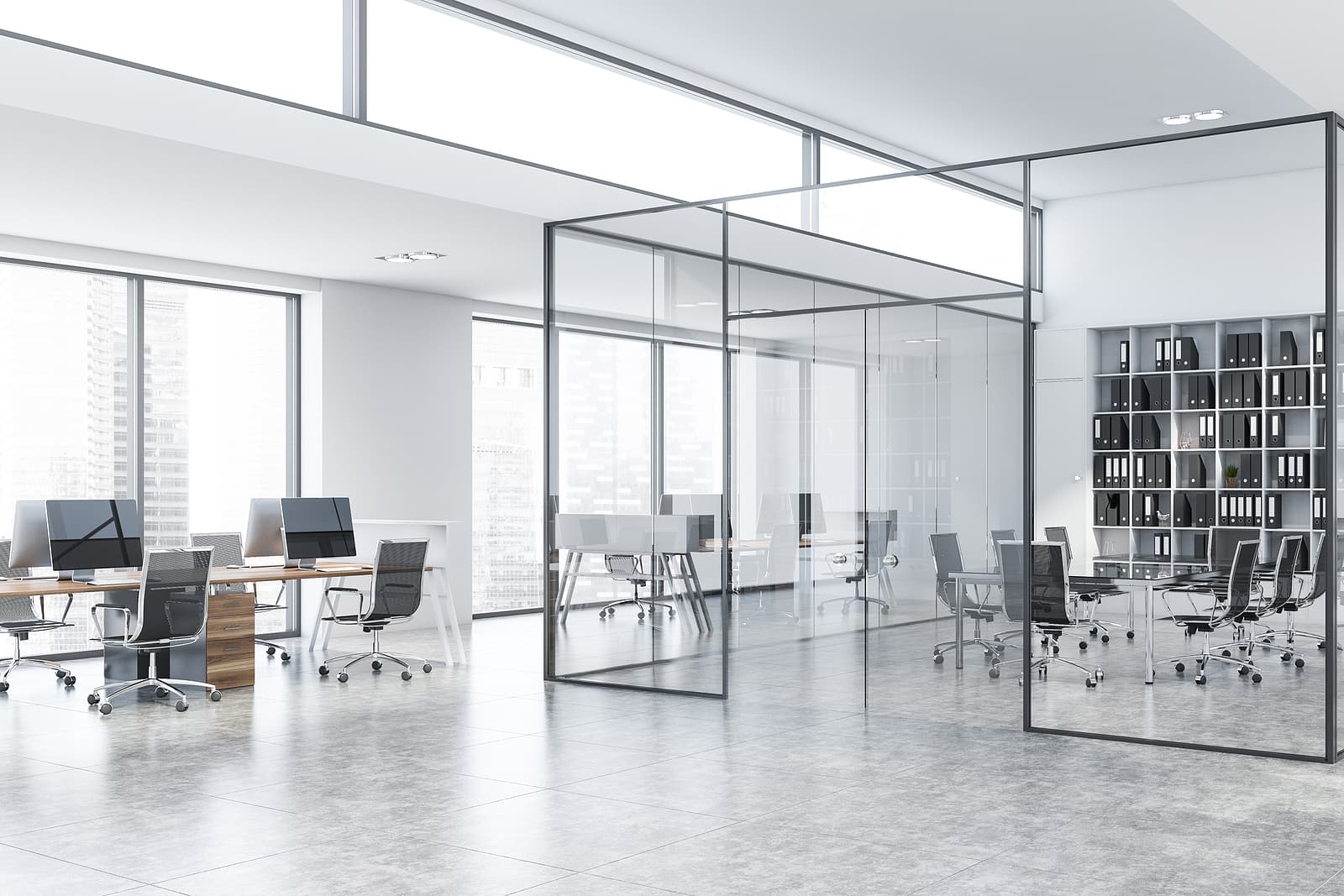
What’s more, glass fixtures are not just restricted to windows, as balustrades, partitions, and staircases are common features in commercial and public structures.
Some even come with smart technology, changing reflective properties to alter the darkness of the glass to provide more privacy or more shielding from the sunshine.
It might have taken centuries for glass windows to take off, but look far how they have come in the last 75 years alone.