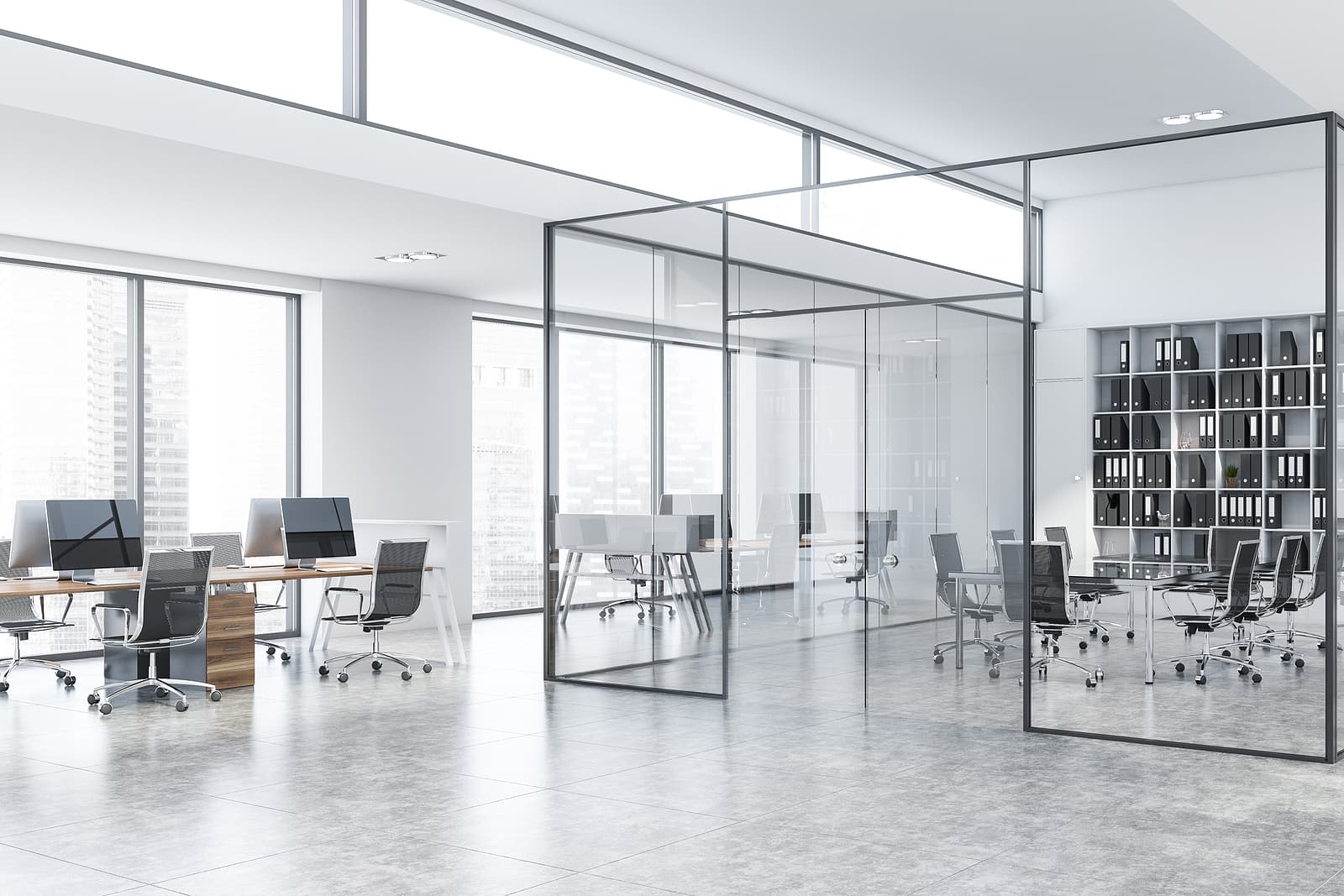
Plenty of modern architecture uses features like glass balustrades and staircases inside offices, exhibition centres and civic buildings, all creating light, airy spaces. But could sports stadiums follow suit?
The design of sporting venues has often followed major trends. The first large football grounds in Britain were often dominated by big stands with characteristic latticework, known as ‘Leitch Work’ after the designer behind it, Archibald Leitch.
Leitch’s can still be seen today at grounds like Ibrox in Glasgow, Everton’s Goodison Park and Villa Park in Birmingham. However, while Ibrox and Villa Park have been much modified down the years, Goodison is now an ageing and outdated ground, which is set to be replaced as Everton will soon move to a new stadium in Liverpool’s northern docklands.
In contrast to Goodison, many older stadiums – like neighbouring Anfield – have successfully modernised down the years with developments such as the use of cantilevered roofs, which don’t need pillars to hold them up and therefore avoid restricted views of matches.
The first one of these built in Britain appeared at Scunthorpe’s Old Show Ground in 1958, before the 1960s saw such stands appearing at large venues such as Old Trafford and Hillsborough.
However, these innovations have long been superseded by further developments. The Hillsborough disaster in 1989 did not just mean the imposition of all-seater stadiums on the higher divisions; many clubs found that adjustment reduced capacity enough to make building new stadiums a smart move, especially if there was insufficient expansion room.
That created a range of opportunities for new stadium design, with clubs like Arsenal, Tottenham, Derby County, Brighton, Southampton, Manchester City, West Ham and Leicester City among those moving.
While Manchester City and West Ham moved into converted venues originally built for the 2002 Commonwealth Games and 2012 Olympics respectively, most were specialised football venues. However, even some of those venues are not so new or perfect that they could not benefit from major new developments.
This has been especially true for Leicester, whose King Power Stadium has been their home since 2002 but is now set for a major expansion befitting a club whose global profile has soared since its unexpected Premier League triumph in 2016.
As well as an expanded East Stand that will add 8,000 seats to the venue, the plans include an indoor arena with a 6,000 capacity, a large new club superstore and a fan zone. Last month saw a final crucial development in the project as the club completed a section 106 order to proceed with the scheme.
The most notable visual element of the plan, designed by architects KSS, is the vast new curved glass roof on the East Stand, something that is not just visually striking, but ensures spectators and those on the pitch will benefit from a large increase in the amount of natural light in the arena.
Whether the use of extra glass and wide open spaces to let in natural light is a pitch-facing feature or an element of the concourses below, this may be one of the clearest trends in the latest stadium developments.
The designs KSS has deployed in stadium design have highlighted this development. Higher ceilings, lots of glass and loads of natural light can be seen in images of projects at venues such as Twickenham Rugby Stadium, Southampton’s St Mary’s Stadium, Brighton’s Amex Community Stadium and even overseas venues like Le Havre’s Stade Oceane.
KSS is far from alone in being in the vanguard of new stadium development. Other leaders include Populous, widely regarded as having designed the most modern stadium in the world for Tottenham Hotspur, overlapping the club’s former White Hart Lane home. It won no fewer than 22 awards.
Features even include glass screens that enable some fans in premium areas to view the players in the tunnel before they take to the pitch, while the spacious and abundantly equipped interior features a total of 61 food and drink outlets.
Populous may even be lined up for the most prestigious and high-profile development of all, having already been drafted in to draw up potential options for modernisation or a complete rebuild of Manchester United’s iconic Old Trafford stadium.
While some of the newer sections of the stadium – dating from the 1990s and 2000s – are spacious and light in places, the venue now trails behind the best and has been widely derided as outdated and in a poor state of repair in some parts, from a leaky roof to the cramped Sir Bobby Charlton Stand, a creation of Archibald Leitch dating back to 1910.
The issue of investment has been much discussed amid talk of the club being taken over, although new part-owner Sir Jim Ratcliffe’s pledge of £245 million will not be enough for a comprehensive rebuild or anything close to it.
It is possible, however, that if this eventually extends to a full takeover By Sir Jim and his Ineos Group, far more funds could be made available, while there is enough space by the stadium for the radical option of copying Tottenham and building a new stadium adjacent to the existing one to be implemented.
Should that happen, given the criticisms of Old Trafford now, a ground-breaking new venue with plenty of interior space and natural light would not only be in line with the latest trends from Leicester to Le Havre, but meet so many of the criticisms of the current venue head-on.
It won’t just be football venues impacted by this. Just as KSS has worked on Twickenham and a planned new 25,000-capacity venue for Bath Rugby Club, Populous projects have included venues for several Olympic and Winter Olympic Games, NFL stadiums and Grand Slam tennis venues from Wimbledon to Melbourne Park.
For those who are used to light and airy, glass-filled offices, public buildings, conference centres and educational establishments, it may seem incongruous to spend weekend days or midweek evenings in sports venues that can be dark, shadowy and cramped, all function and no aesthetics.
However, it appears that time is rapidly coming to an end, greatly enhancing the experience of the paying spectator into the bargain.