For most of recorded history, the tallest buildings in the world were made of stone. The Great Pyramid of Giza, for instance, was 482 ft tall when built from limestone-encased granite and was higher than any other building in the world for thousands of years. Even today it is still 449 ft.
Of course, the loftiest modern skyscrapers make the height of the pyramids (though not their historical significance) seem distinctly modest today.
Skyscrapers Before The Age Of Glass
At first, these buildings arose in the US and were made from a mixture of steel and masonry with no more window area per floor than other, lower buildings. Examples of these early skyscrapers include the most famous of them all, the Empire State Building, completed in 1932.
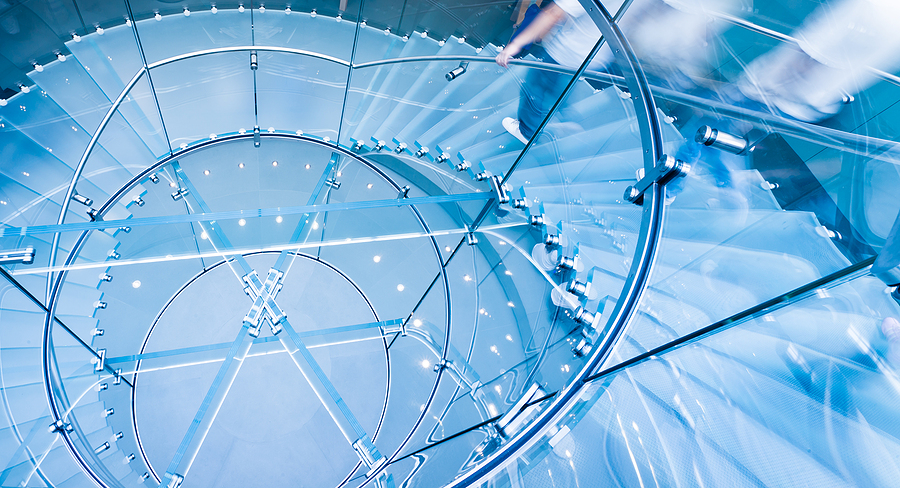
Even in an older skyscraper like the Art Deco Empire State Building, there is plenty of glass inside, although this is more about the stylish fixtures and fittings than adding the sense of openness and light that characterises many more modern structures.
That modern look arises from the reality that the glass content of skyscrapers has become increasingly prominent. That may be attributed to a range of factors; architectural styles, the development of more robust glass and other construction technology and design innovations, plus the perceived needs of those using the building.
In the latter case, it may be observed that in many cases the benefits of having lots of glass inside the building involve further enhancing what comes from it having a glass exterior. This means there is an experience of extra natural light and space that is not only healthy (think of all that vitamin D) but also mood-enhancing and aesthetically pleasing.
Why Glass Means Style And Novelty
The presence of glass in both the exterior and the interior also allows for a stylistic consistency and a fair degree of experimentation. It has been a particularly notable feature of the last couple of decades how many unusual-looking skyscrapers have emerged.
London is an exemplar of this. The Shard is known by its official name, which is in contrast to the nicknames that have conferred the monikers of the Walkie-Talkie, the Cheesegrater and the Gherkin. But alongside the unusual shapes is the common feature that these are structures dominated by glass.
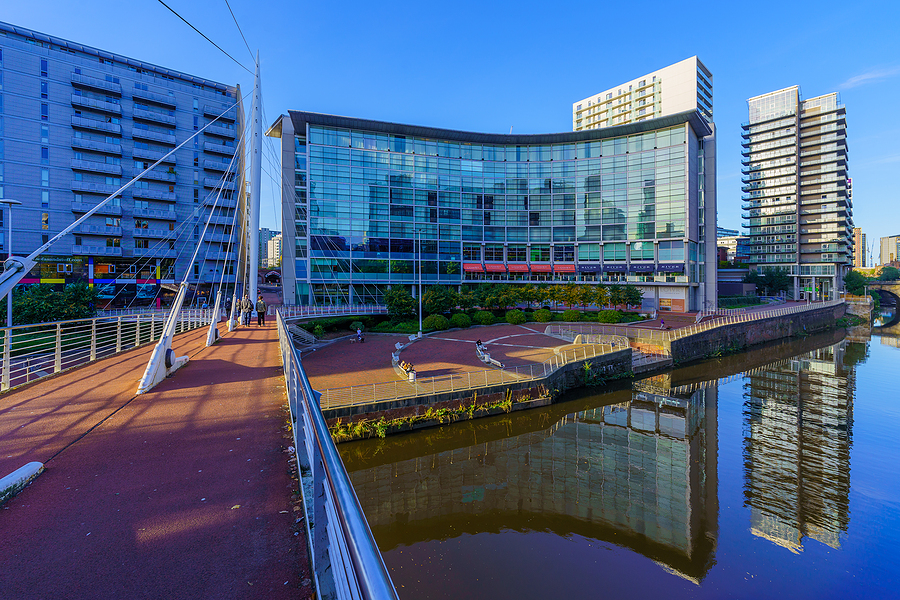
Not everywhere has glass skyscrapers that are highly unusual in shape. Indeed, it is a common lament that the rapid transformation of Manchester’s skyline has come from a plethora of very similar-shaped buildings with little or no novelty factors. If Manhattan had Art Deco before it had steel and glass, Manc-hattan is regarded by many as a little dull.
However, Manchester is an exception to the rule as modern glass skyscrapers continue to stand out visually. And unusual shape is not just about original design; sheer height has become as much an obsession now as when the Empire State Building rose up all those years ago.
Reach For The Sky Above The Sand
Indeed, while Egyptians will treasure their pyramids, it is their fellow Arabs in the Gulf who now have the tallest buildings. Asia had already moved ahead of the West with some very tall structures in the Far East, but Dubai’s Burj Khalifa shattered all records by soaring 2,717 ft into the sky.
As may be expected, the building contains a phenomenal amount of glass and the installation of an aluminium and glass façade at 512 metres (1,680 ft) was a new record for the highest of its type in the world. But it also has a lot of glass inside, although there is by necessity a firm concrete core to enable such a tall building to stand firm.
Not to be outdone by their neighbours, Saudi Arabia is currently building an even taller tower. The Jeddah Tower will, when complete, be 3,281 ft tall, or a kilometre.
The amount of glass inside and out will be huge, although the building will, like the Burj Khalifa, have a strong concrete base. It is not just because of their extreme height, but the relative weakness of the sandy geological conditions below.
What the glass does is help make the tower lighter while its concrete core adds strength. This is most important in a record-breaking skyscraper, but also very useful in a smaller one, even if it is by any standards very tall, such as the Shard.
Ultimately, however tall a building is and whatever its purpose – be it offices, a hotel, residential, or a mixture of these, the use of glass can be practical, user-friendly and aesthetically pleasing all at once. Don’t expect its very extensive use to go out of fashion any time soon.