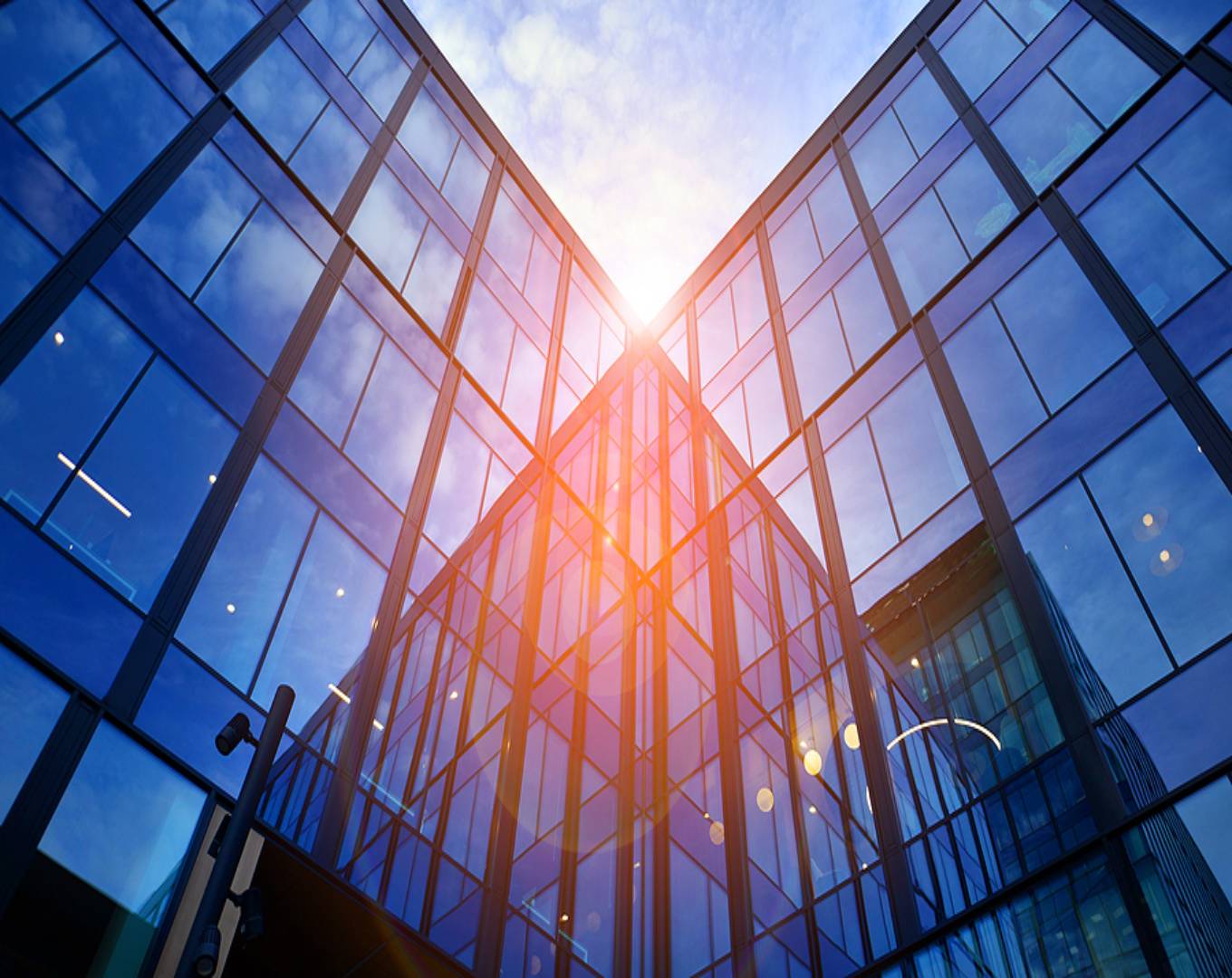
The increasing use of glass in modern buildings is something architects have used with great success. In many ways it is not hard to see why; glass looks modern, can be kept clean easily, and enables buildings to be flooded with natural light as well as enhancing the effects of internal lighting.
Such an environment can be much more attractive, whether it is used for commercial purposes, where navigating a building is important for visitors and staff alike, or to offer a very pleasant place to live in.
By contrast, buildings with lots of visual impediments, corridors, walls and shadows are by nature quite intimidating places, where few would venture after dark.
Having features like frameless glass balustrades, whether inside or externally on balconies and rooftop terraces, adds to this effect, making buildings lighter and more enticing.
Why Glass Makes High-Rises Better
This may be one of the key distinctions between the kind of unattractive high-rise developments that emerged in cities across the UK in the 1950s, 60s and 70s and the modern apartment blocks that have become such a prominent feature of city centres today.
Location is certainly an element of this – the modern blocks are appearing in areas that often had low residential populations and, de novo, are creating new neighbourhoods close to the commercial and public heart of a city, as well as many of its attractions and entertainments. By contrast, many old blocks were built in historically poor areas following slum clearances.
However, the design is also a key feature. The old blocks were cramped, often shadowy and poorly designed, providing low-quality living and encouraging crime. By contrast, when modern apartment developments appear in such areas now, the word ‘gentrification’ is never far away, with examples including New Islington in Manchester and some London boroughs.
That argument can be wrapped up in a false nostalgia for areas of cities that have had a bad reputation in the past, but if you are involved in planning a new development there are ways in which the design of a new building can still be modern and use lots of glass, but not in an unrestrained way.
How A Project In Leeds Uses Glass Sensibly
A couple of potentially contrasting examples might be considered. In Leeds, McClaren’s property arm has just gained planning permission for a large project on the west side of the city centre at Wellington Square, including a 141m, 45-storey residential skyscraper and two office buildings, rising to 14 and 15 metres respectively.
In the wider scheme of things, these buildings are not out of tune with the way Leeds is being developed. It may not quite be developing the Manhattan-lite skyline of Manchester, but its tallest buildings are getting higher and higher.
However, while the scale is large, the design is not simply all about steel and glass facades. Instead, the buildings will all have glazed terracotta facades, with the residential tower having white tiles and the office buildings a brick red hue, designed to match the dominant colours of the built environment.
Such an approach may hint at a willingness to curb some elements of design to fit in with older and more traditional structures, but of course that does not prevent the use of glass to make the interiors more attractive.
Architects Howells have a history of designing city centre buildings in this way, another example of this being 125 Deansgate in Manchester, which also has a red brick-coloured façade. It is described by Howells as a building that “learns from the architectural ambition of its high Victorian neighbours”.
That may reflect the particular part of the city the building is in, close to the Town Hall and away from its tallest towers, the steel and glass monoliths of ‘Manchattan’ that divide opinion so much. But it also demonstrates that sometimes the key to incorporating glass in building design is to do so in a restrained fashion in the right areas.
A Different Story in Liverpool?
A contrasting example may be a large planned development in Liverpool. Like Leeds, the city has far fewer skyscrapers than Manchester, but is nonetheless set for more.
The King Edward Triangle, part of the Liverpool Waters scheme, has just changed hands, with developer Hugh Frost, whose Beetham company has produced some notable tall buildings, joining retailer JT Morris to purchase the site from regeneration firm Peel Waters. 1,200 homes are planned for the site in new towers.
If these Beetham towers resemble their counterparts in Manchester and Birmingham, the design will involve an unabashed dominance of steel and glass, offering lots of light and modernity but little or no concession to traditional architectural styles or materials.
Should that be the case, it could simply be that the character of the area is already changing so much beyond recognition that it may not make a lot of difference.
The waterfront area has been key to efforts to regenerate the city, but this has come at a cost, as the impact on the appearance of the built environment led to UNESCO withdrawing Liverpool’s ‘Maritime Mercantile City’ World Heritage Status. This has not just been about tall buildings, with the last straw being Everton’s new Bramley Moore Dock stadium.
At the time, that decision brought derision from those who felt they had been forced into a trade-off between World Heritage status and much-needed urban regeneration. But now that battle has been lost, it might be argued that there is little need to hold back in design terms.
Getting The Balance Right
These kinds of questions exist everywhere; few more eclectic collections of skyscraper design exist than in the City of London with its Gherkin, Cheesegrater and Walkie Talkie, yet amid this are some of Britain’s most treasured buildings, such as St Paul’s Cathedral.
In the same way, the Liver Building may be among those structures given consideration when design parameters are set in Liverpool, but without much restricting the designs of other waterfront buildings.
Even so, the fact remains that whatever the frontages or shapes of buildings look like, the capacity of modern construction technology to create buildings that attract lots of light, provide extensive lines of sight in open, airy exteriors and, in residential buildings, avoid intimidating dark corners makes them far better environments in which to live and work.