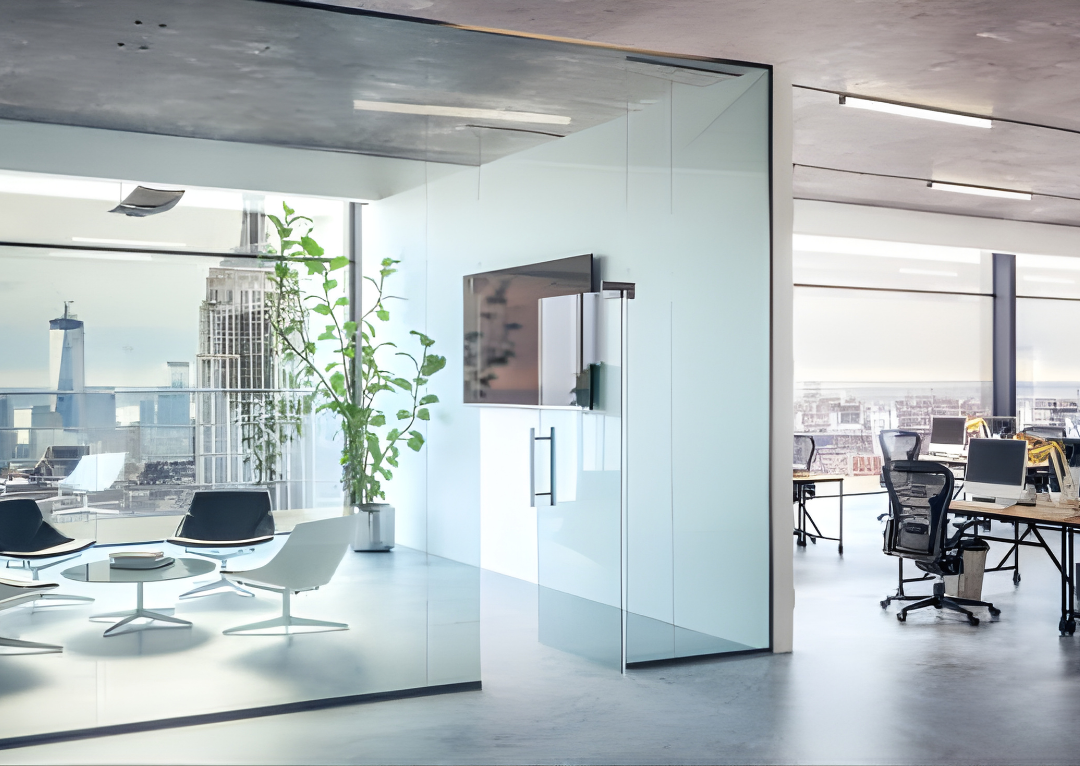
Glass is an integral part of our architecture for both exterior and interior glazing, and even contemporary glass staircases. In recent years, architectural glazing has made some significant advances in technology that is transforming the look and the way we use commercial and residential buildings.
Here’s a look at the origins of glassmaking and the impressive innovations that we benefit from today.
Early manmade glass
Manmade glass was thought to have first been invented about 4,000 years ago in Mesopotamia, when craftsmen experimented with mixing sand, soda and lime. Early man-made glass was reserved for decorative items and was only available to the very wealthiest in society.
Glassmaking developed during the Hellenistic period to become focused in the wider Mediterranean region and it became frequently traded in the form of items such as beads, drinking vessels, perfume holders, bracelets, and mosaic tiles. The techniques of glassmaking continued to evolve and spread throughout northern Europe.
By the 17th century, new methods of adding lead to the formula led to harder and more accurately shaped glass to be formed, which eventually led to panes of glass being made for windows. However, it would be another 200 years before mass-produced glazing was affordable for the majority of buildings.
Cutting edge advancements in glass
Today, glass-fronted buildings are commonplace in our towns and cities, and glass is used for balustrades, room partitions, stairs, doors, and more. Modern technology means that architectural glazing is an increasingly dynamic part of building design. Here’s a look at some of the latest developments.
Self-cleaning coatings
Keeping glass looking clear and clean can be a never-ending process, particularly in large inner-city buildings where it is constantly exposed to dust, dirt and pollution. Self-cleaning glass has a titanium dioxide coating that uses the sun’s rays to break down particles on the glass surface.
When the glass comes into contact with rainwater the surface reconfigures the droplets into a sheet of water, which travels down the surface taking the dirt with it. This avoids the individual droplets of water absorbing the dirt and drying out on the surface of the glass.
This self-cleaning technology is particularly useful in high-rise buildings where window cleaning is a high-risk and costly maintenance task.
Acoustic glass
Noise pollution can be a serious problem, especially in urban areas or in large open-plan office buildings where meetings, telephone calls, and collaborative groups can disturb employees who need to focus on detailed work. Finding private areas to discuss confidential matters can also be a challenge in this type of environment.
Acoustic glass can be used for glass partitions to provide soundproof spaces within offices or any other type of commercial or residential building. The technology works via a layer of Polyvinyl Butyral (PVB) between two sheets of glass, which acts as a sound barrier. It is capable of absorbing sound waves, dampening or blocking them altogether.
Energy efficient glazing systems
Energy efficient glazing is capable of adjusting to the solar energy based on temperature, and can automatically absorb or retain heat to keep buildings warm in winter and cool in summer. This can help to reduce the need to use heating or air conditioning systems, saving on fuel bills and lowering the carbon footprint of the building.
There is no need for any manual control, as the technology adjusts automatically to the temperature and the strength of the sun’s solar energy.
Dynamic shading systems
A further impressive advancement in glazing technology is dynamic shading systems, which are capable of adjusting the tint of the glass and reducing solar heat gain. It makes use of electrochromic technology, which enables a thin coating on the glass to change from clear to tinted when a low DC voltage is applied.
In architectural glazing, up to four levels of tint can be achieved relative to the visible light transmittance. It can be used for both interior and exterior glazing and can significantly reduce the need for air conditioning by controlling the amount of solar heat gain. This lowers energy costs and carbon emissions, and helps the building to achieve higher eco-friendly ratings.
The dynamic glazing system can be linked to a wider building management system for ease of control, and adjusted manually according to the building use and environmental conditions.