The notion of city centre living and dwelling in high-rises was once something on which Britons and those living overseas differed. While multi-storey apartment blocks are the norm in many European cities and some in North America, for most people here the predominant aspiration was an owner-occupied semi in the suburbs.
Indeed, over much of the 20th century the ‘flight to the suburbs’ saw significant population shifts, with core inner city areas, even in London, witnessing a population reduction. 1960s tower blocks, far from being the utopian future after the slums were cleared, turned out to be unattractive, unpopular and associated with poverty and crime.
A Trend Goes Into Reverse
However, from the final years of the 20th century, this trend has gone into reverse. Since 1989, London’s population has risen from 6.8 million in 1991 to almost nine million three decades later. Birmingham’s population has risen from 961,000 to 1,144,000 over the same period.
Similarly, other big cities like Leeds, Manchester and Bristol have seen significant increases.
What has been notable is how this has been achieved to a large extent by the repopulation of inner city areas. Manchester is a prime case, with just a few hundred city centre residents in the 1990s but tens of thousands now; the skyscrapers and multitude of other residential developments speak of a district transformed as a place to live.
The demographics of those increasingly living in city centres and surrounding areas are changing as a result. Some may speak dismissively of ‘gentrification’, but it represents economic revival, the wise use of brownfield land and a response to very high demand.
The Importance Of Quality
However, to achieve this means that multi-storey apartment developments need to be of a far higher quality as places to live than the grim 1960s tower blocks, or notorious concrete crescents (the Hulme area of Manchester was transformed after these were demolished in the 1990s).
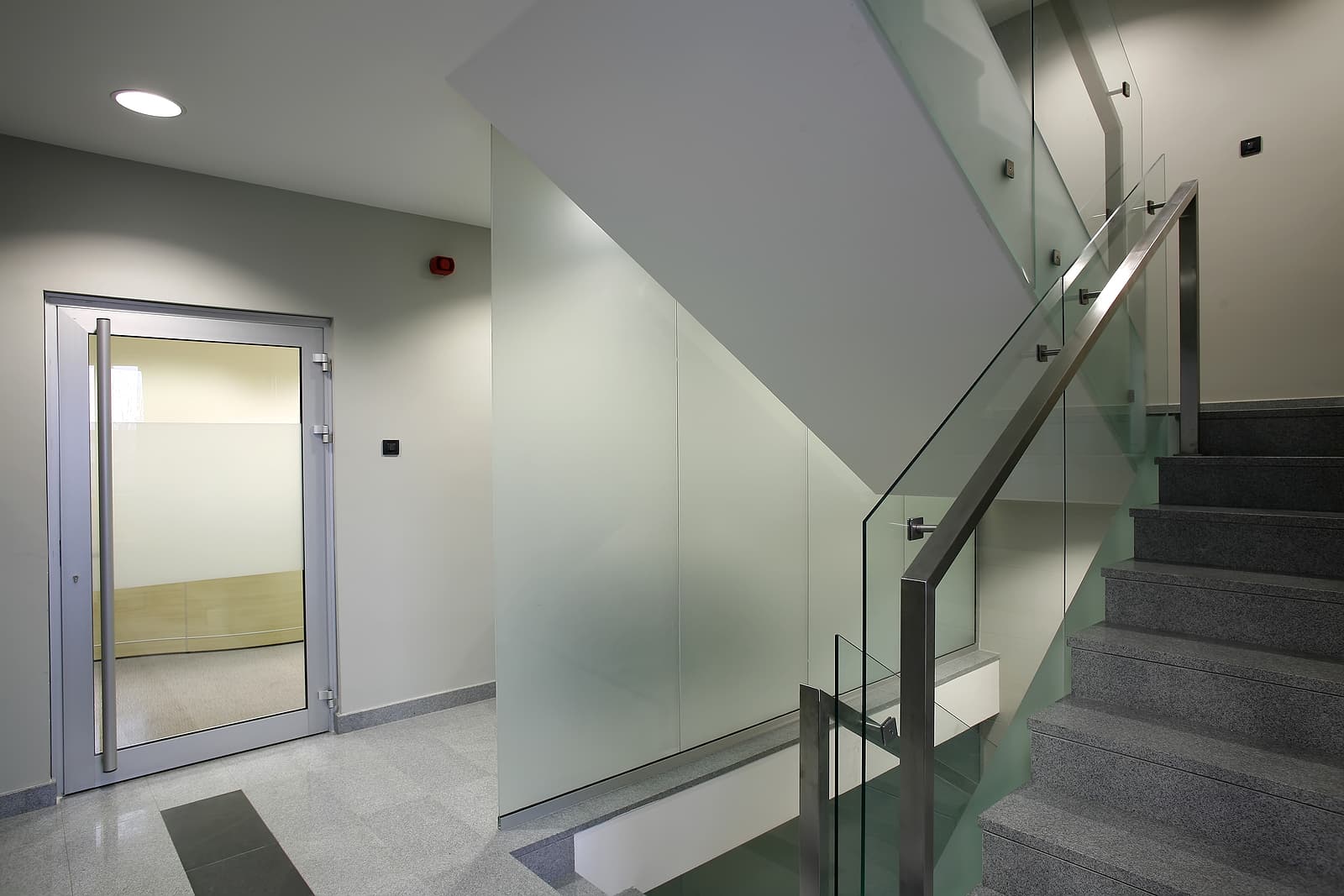
If any architectural feature represents the modern, attractive and upmarket apartments that epitomise revived city living, it is surely the frameless glass balustrade. These provide apartments with uninterrupted views from their balconies, extra light and a fine place to enjoy the views on a sunny day.
A new development that epitomises this design feature will be a pair of multi-storey blocks at Manchester Waters on the western edge of the city centre, which have just been given planning permission.
Images of the 159 build-to-rent apartments show the use of glass balustrades on the balconies, from where residents can overlook the Bridgewater Canal and Manchester Ship Canal.
The attraction of having bodies of water to overlook can add to the appeal of such balconies, something that applies in other areas around central Manchester. Similar vistas can be enjoyed in other cities, such as over Birmingham’s many canals and London’s numerous waterways.
Of course, glass balustrades on balconies are far from the only modern, stylish feature that makes modern, attractive apartments in cities a huge contrast to the grim 60s and 70s tower blocks that most people would only live in as a last resort.
Whether it is the higher quality of materials or the tie-in between their locations in modern city centres with all the amenities and attractions that now exist to serve the new generation of residents with high disposable incomes, there is a whole new appeal to city living.
Councils Act To Keep Standards High
Of course, some UK cities were more liveable down the years. Central London has always had its desirable residential districts, where residents lived in plush apartments in Regency villas. But even in the capital, modern apartment developments have proliferated in recent years as the population has grown, often in hitherto unfashionable areas.
For that reason, it may be unsurprising that local councils, recognising the need for these new buildings to be attractive in design and style, have been taking unprecedented action on occasions to ensure they are built to high standards.
Thus it was that Greenwich Council issued a planning enforcement notice last September against developer Comer Homes for failing to build its Mast Quay Phase 2 development in accordance with the design agreed upon at the planning application stage. The stepped three-block apartment development contained no fewer than 204 properties.
Comer Homes received the notice, requiring they demolish and rebuild the blocks, as they had failed to comply with the planning agreement in 26 instances. This included a lack of wraparound balconies and smaller balconies, or rooftop gardens.
It is a reminder that modern design in which glass plays a big part is a key to ensuring the apartment blocks that have made possible a surge in urban populations remain high in quality. Developers should take note, lest they face the same fate as Comer Homes.