Glass balustrades are a popular choice for homes and businesses in the UK, both for indoor and outdoor spaces. They bring a sleek and contemporary aesthetic, whilst also offering high levels of safety and functionality. There’s a wide variety of options available, and it can be difficult to know which would suit your specific needs and requirements the best.
Here is a guide to navigating the key considerations when selecting glass balustrades.
Choosing glass balustrades for indoor spaces
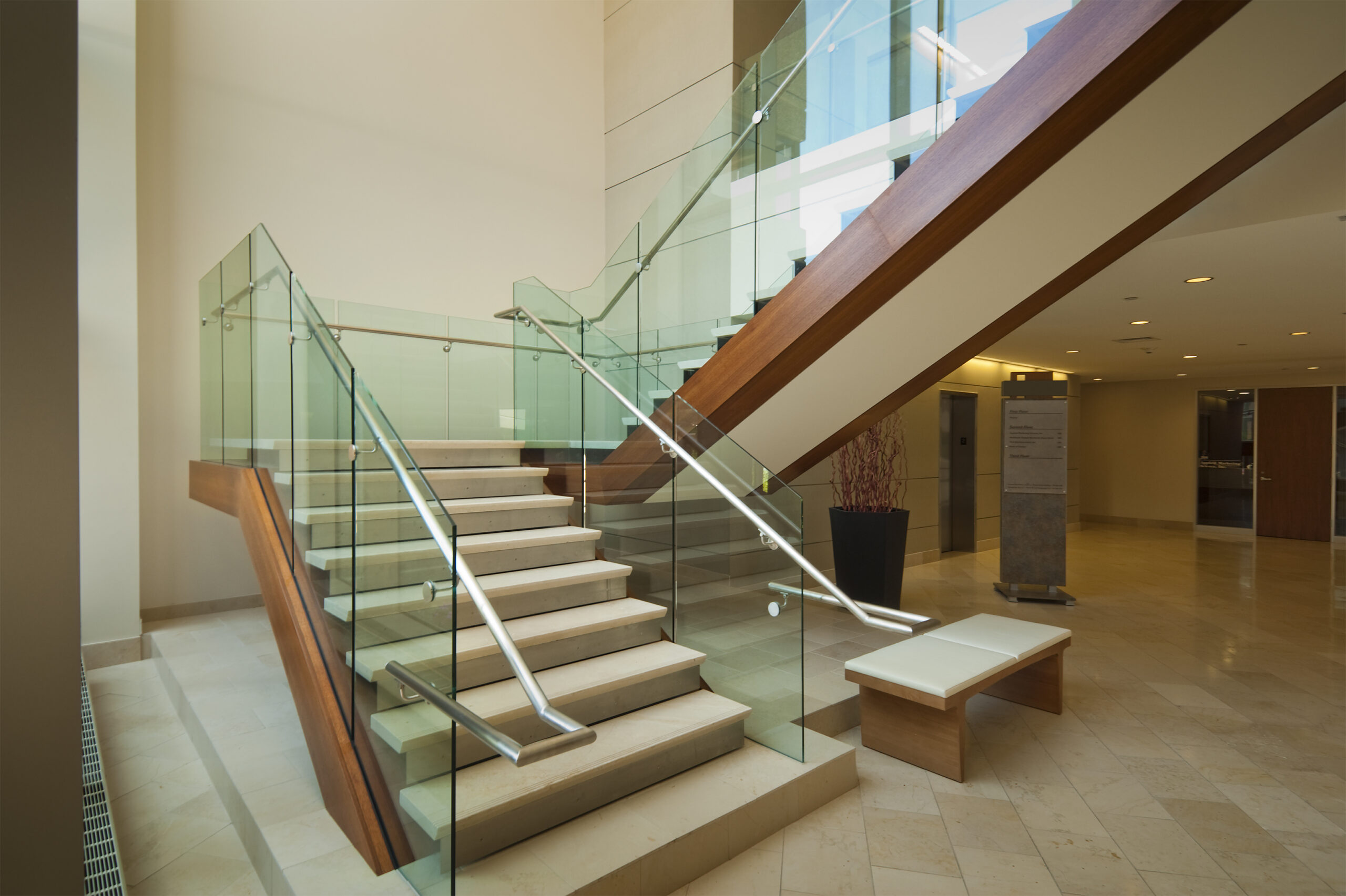
Glass balustrades are typically used indoors for staircases, landings and mezzanine floors. They are a more contemporary choice than traditional wooden rail and bannisters for stairs, and can help to make indoor spaces feel lighter, airier, and larger.
By allowing more natural light to flow into the room, you will need to rely less on artificial lighting and will reap the benefits of lower energy bills and improved mood and mental health, particularly if you are prone to suffering from seasonal affective disorder during the winter months.
In indoor spaces where safety is not the first priority, the glass can be thinner and more decorative. While the glass will always be toughened or tempered and meet stringent safety standards, it may not need to be as thick or have the same levels of reinforcement as glass installed in outdoor spaces.
Choosing glass balustrades for outdoor spaces
Glass balustrades are frequently used outdoors for balconies, patios, outdoor stairs, or for zoning different areas of a garden. The materials need to be strong enough to withstand the weather conditions and UV exposure.
They will also need to comply with building regulations and any local planning laws, particularly if you have a listed property or live in a conservation area. Generally, you will not need planning permission to install outdoor balustrades, but it’s best to be on the safe side and check with your local authority first if you have any doubts.
The manufacturers, suppliers or installers should be able to provide evidence that the work and materials are fully compliant with the relevant standards and regulations. For example, outdoor frameless glass should be toughened and laminated to ensure that it is safe enough to withstand impacts.
Framed or frameless?
Once you have determined the purpose and location of your glass balustrades, the next big consideration is whether to choose framed or frameless glass. This is mainly for aesthetic purposes, because they are both safe and secure structures.
Framed glass balustrades
Framed glass balustrades can be installed with a post and rail system, or with posts only. This allows you to introduce other materials such as wood or metal into the balustrade, which can bring a more traditional feel to features such as domestic staircases.
The option of a handrail is an additional safety feature if someone needs to use them for extra support, which may be a consideration if they are being used as stair guards in public buildings such as hospitals and schools. The posts between each glass panel helps to hold them in place, providing extra stability and support.
Frameless glass balustrades
Frameless glass balustrades provide a minimalist and contemporary look that provides an unobstructed view. This is ideal if you want the glass to blend seamlessly with the rest of space, without impeding the flow of light and the harmony of the structural and interior design.
In outdoor spaces, frameless glass is ideal for balconies and patios where you want to enjoy a wide open view of the garden or beyond. They are useful for surrounding outdoor pool terraces, because you can always have a full view of the water and keep an eye out for children near the edge, or anyone who might have got into difficulty.
Decide what type of glass to use
The thickness and degree of toughening of the glass will to some extent depend on the location, purpose and whether the balustrades are framed or frameless. However, there are further aesthetic options such as low-iron glass which is extra clear, tinted glass with a subtle hue, or frosted satin glass for an extra degree of privacy.
It may even be possible to incorporate patterns into the glass to harmonise with corporate branding or your interior design scheme.