Whilst it took a very long time for structural glass to become the vogue for modern architectural design, particularly in offices and commercial buildings, there have been attempts to maximise the flexibility and usability of glass in a structural capacity for a very long time.
The rewards for doing so are self-evident; the perception of space is critical for enjoyable work, and when selling office space or a building itself, the larger a space looks, the more a buyer is potentially willing to pay. This makes partitions and staircases made of glass a worthwhile investment.
The origins of this can be found in the glass brick, a system of blown glass blocks that were fitted together, could be a structural component to a building and allowed for both privacy and additional light during a time when frosted glass partitions were not necessarily an option.
They were initially used in factories in order to meet health and safety requirements when it came to light, however, their most famous use was in a rather mysterious building that became the only surviving remnant of interior designer turned unlikely architect Pierre Chareau.
People Who Build Glass Houses
Whilst there were attempts to build primarily glass and steel structures before it, the Maison de Verre in Paris is one of the most unique and influential buildings of its day, and would at some point house some of the greatest artists and political minds of the era, including Pablo Picasso and Walter Benjamin.
Commissioned by gynaecologist Dr Jean Dalsace and designed by the collaborative trio of Mr Chareu, Dutch architect Bernard Bijvoet and metalworker Louis Dalbet, the house was revolutionary in many uses of the term, most notably by its use of glass block for its external wall.
Unlike later buildings that used a curtain wall facade, these glass blocks on a steel frame were also a structurally critical feature and the translucent blocks were interspersed with more conventional glazing used for transparent windows.
Whilst it would ultimately prove to be prophetic, the initial aim of the glass block was inspired by industrial construction, and the glass blocks, alongside rubber floor tiles, bare steel beams, industrial-inspired lighting and an emphasis on mechanical, multipurpose fixings were a critical part of the building’s philosophy.
Dr Dalsace wanted the building to use honest materials, a trend that was increasingly popular in the 1920s, variable transparency via the use of glass bricks, and a mix of traditional interior design with more industrial materials more commonly seen on the factory floor.
The materials, however industrial and standardised they were intended to look, were indeed bespoke, leading to four years of construction whilst much of the furniture needed to be made by hand by Mr Chareau and perforated metal designs by Mr Dalbet.
It was used as both a home and Dr Dalsace’s medical practice, so the ground floor had a unique screen that hid away the main staircase during the day and framed it utterly at night.
There were also several retractable staircases and sliding screens, using variable partition designs and shapes that would only become popular decades later.
The story of the architecture is almost eclipsed by the incredible story of its construction. Dr Dalsace bought another, older Parisian building with the intent of creating his ultimate home and practice.
The building he bought was four floors high and was intended to be completely demolished. However, when an elderly tenant who lived on the top floor outright refused to sell their residence, the building project needed to work underneath this top-floor structure.
It would need to be hollowed out without affecting the flat underneath, something that increased the construction time and complexity.
However, the building would prove to be highly influential in ways even beyond the architectural world, of which it would prove to be decades ahead of its time.
Alongside his medical work, Dr Dalsace was a major political figure and member of France’s Communist Party. During the 1930s his house would become a regular salon for various intellectuals, poets, artists and historians.
Walter Benjamin would be particularly attached to the building, and the work Experience and Poverty would discuss the concept of glass buildings and a glass culture at length.
Unfortunately, one of its chief designers, Mr Chareu, did not get to enjoy the legacy of the building itself.
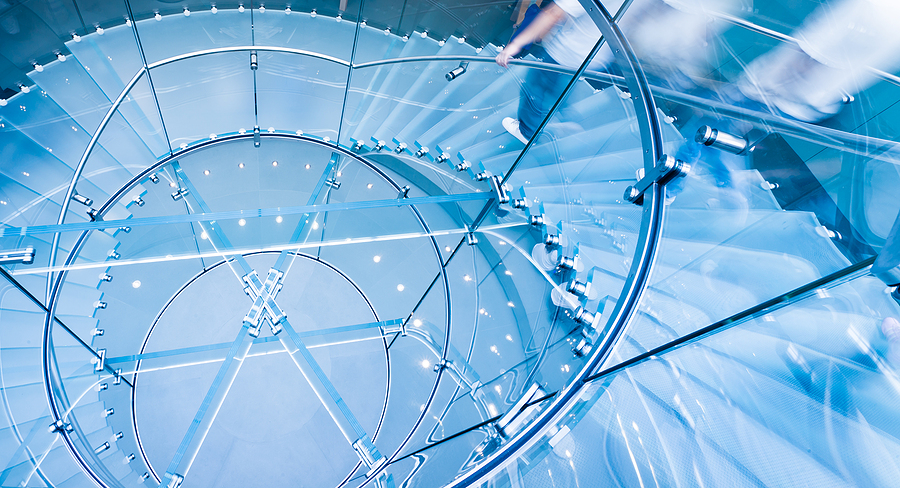
Right as he was starting to develop a reputation for innovative designs, including the first structural glass staircase in 1932, the Second World War began, and in order to escape the Vichy regime, his wife and he fled to New York via Morocco.
He only designed one more house and died penniless in 1950, right around the time the architectural world caught up to him.